Category

Worker Ownership Initiative Featured in Chronicle of Philanthropy

Fred

The Nexus Worker-Ownership Initiative and Kendeda’s radical grant making strategy was featured in the Chronicle of Philanthropy! The excerpt on Worker Ownership is below and you can read the full article here.

“Some grant makers, including the Kendeda Fund, which was founded by Diana Blank, the former wife of Home Depot co-founder Arthur Blank, have made grants to organizations that give workers more say in running the companies that employ them.

The Kendeda Fund has committed more than $24 million to groups trying to increase the number and awareness of worker- owned companies, such as Evergreen Cooperative Laundry.

In August, Kendeda committed more than $24 million to four such organizations: the Fund for Employee Ownership, which buys companies from retiring baby boomers and coverts them to worker-owned outts; the ICA Group, which will support conversions to employee ownership in the home-care and child-care industries; Nexus Community Partners, which will work to promote conversion to employee ownership in industry sectors likely to employ people of color, and Project Equity, which works to raise awareness about employee ownership.

Making those changes in a few select business sectors is minor compared to the task of securing shifts among publicly traded companies that do business in the global market, admits Diane Ives, Kendeda’s adviser for people, place, and planet. Currently only about 450 worker-owned cooperatives exist in the United States. But, she says, the number of startups and business conversions is growing. She hopes Kendeda’s grants can help build a network of worker-owned businesses that advocate for employee-friendly regulations and that distribute profits to employees and benefit the cities where they work.

“There are a lot of motivations for running a business. Profit is not the only one,” she says. “Transitioning to employee ownership allows a business owner to tap into some of those other values, like an appreciation for the work force and the role the business plays in the community.”

For Nexus Community Partners’ 15th anniversary, Director of Community Wealth Building, Elena Gaarder, reflects on creating wealth in communities of color, working with private businesses to transition to cooperatives, and imagining abundant communities. 

Words by Nichelle Brunner • Downloadable Version

When Elena came to Nexus, there was a central question being asked: how to better create economic vitality on St. Paul’s East Side? 

“In 2013, we brought together our partners to ask this question and from these conversations grew 2 game-changing efforts- the East Side Funders Group, originally founded by  Nexus and the McKnight, McNeely, St. Paul and Northwest Area Foundations, and the East Side Economic Growth Initiative, which was a collaborative of 9 non-profit organizations and Metropolitan State University.  

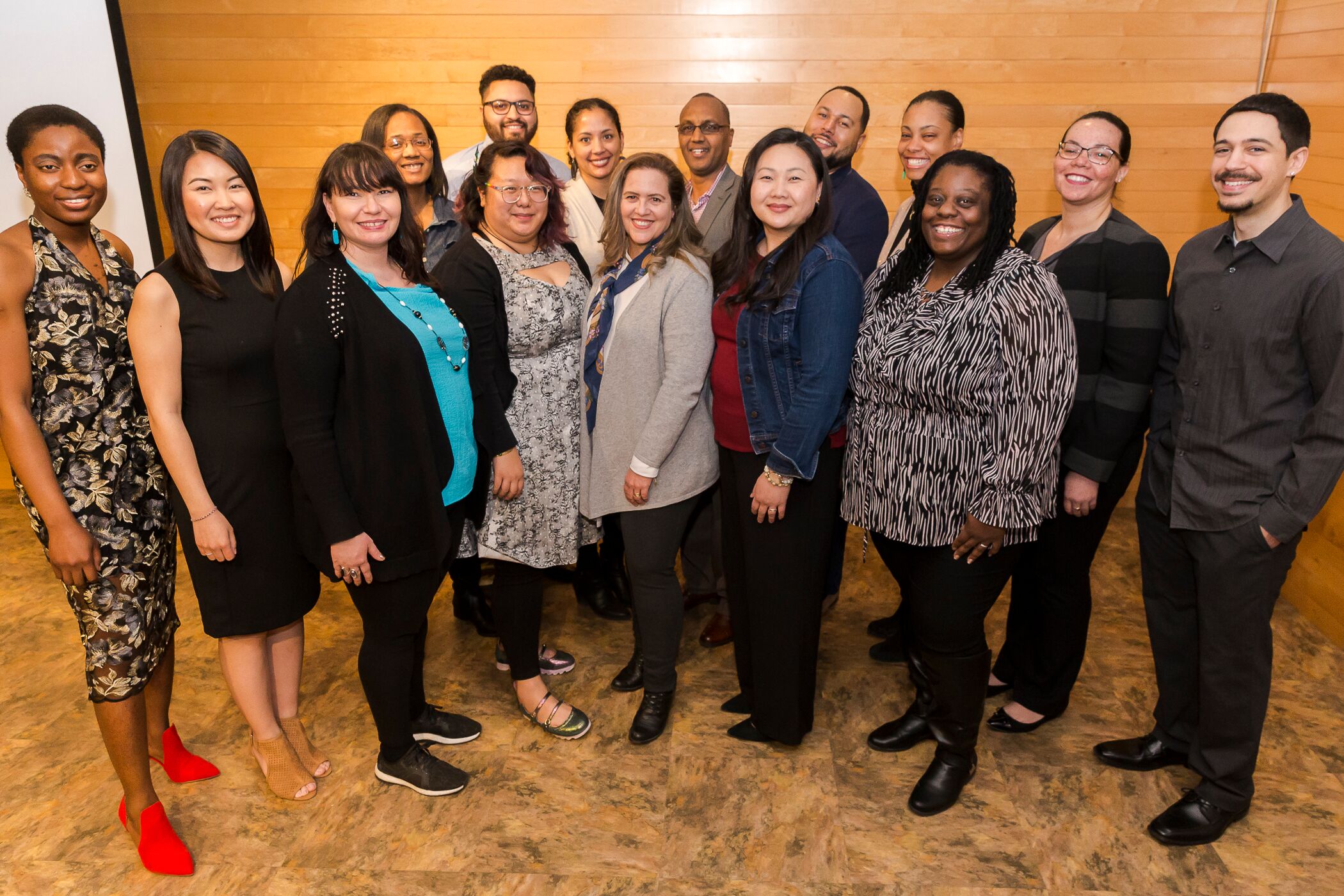
Nexus partners and staff celebrate the launch of the Nexus Worker-Ownership Initiative.

While both efforts have evolved over time, their aligned work created new partnerships and  new pathways for building wealth on the East Side. This work also inspired Nexus to begin exploring models that go beyond individual asset and wealth building and traditional economic development.

As part of this exploration, Nexus began connecting with stakeholders across the country,  including The Democracy Collaborative, an organization that played a key role in developing the Evergreen Cooperatives in Cleveland, Ohio, and Oakland-based Project Equity, a group that supports businesses in transitioning from privately-owned companies to broad-based employee-ownership.

What emerged from Nexus’ travels was a deeper understanding of the importance of local and broad-based ownership models, including worker cooperatives.  “We always looked at the community as a resource and were committed to providing people with ownership opportunities. In the past, however, we were not explicitly addressing the ways in which people’s labor is commodified and how this has created the bulk of wealth in our country. We can’t shift  economic systems if we, as an organization, are not addressing the commodification of labor. 

So in 2015, Nexus adopted a community wealth building framework, which has at its core a commitment to building broad-based ownership models .The adoption of the framework also brought up more questions: how could Nexus influence a shift in traditional economic development practices ? What do regenerative economies look like? How can Nexus create a culture of ownership?

Currently, Nexus is working through all of those questions. 

In April 2019, Nexus launched the Worker Ownership Initiative, which knits together an ecosystem to support cooperative development and to support Twin Cities businesses in transitioning to employee-owned and democratically-control  workplaces. The idea is to normalize worker co-ops as tangible business model and over the next three years, convert five to seven businesses to worker-owned cooperatives.

Public sector leaders at the Government Equity Summit on Cooperative Development in San Francisco, CA, organized by Nexus Community Partners and Project Equity.

The organization is also hosting a co-op learning events where community members come together to learn about cooperative movements and the cooperative framework. They are supporting members of the Black community in starting cooperatives through the Northstar Black Cooperative Fellowship and by providing grants to organizations like the Hmong American Farmers Association and BiiGiiWiin who are exploring cooperative ownership models.

“Even having the conversations around community wealth building has helped to elevate how  cultural communities have always worked collectively to support one another . In the end, you do not need direct services or non-profits to engage because the community has built its own wealth. Direct service work is necessary, but it’s not really getting folks out of poverty,” said Elena

When asked about the future of community wealth building and what abundant communities feel like, Elena creates an almost poetic imagery. 

“This sounds corny, but the weather is beautiful, there’s a light breeze, and you never have to be afraid. Everyone has the means to live how they want to live. Oppressive systems that cloud people’s views have been replaced by regenerative economies where things can grow.  With community wealth building, we don’t have to choose people over profit. Communities don’t have to look at things through a scarcity lens. Everyone can just breathe easy.”


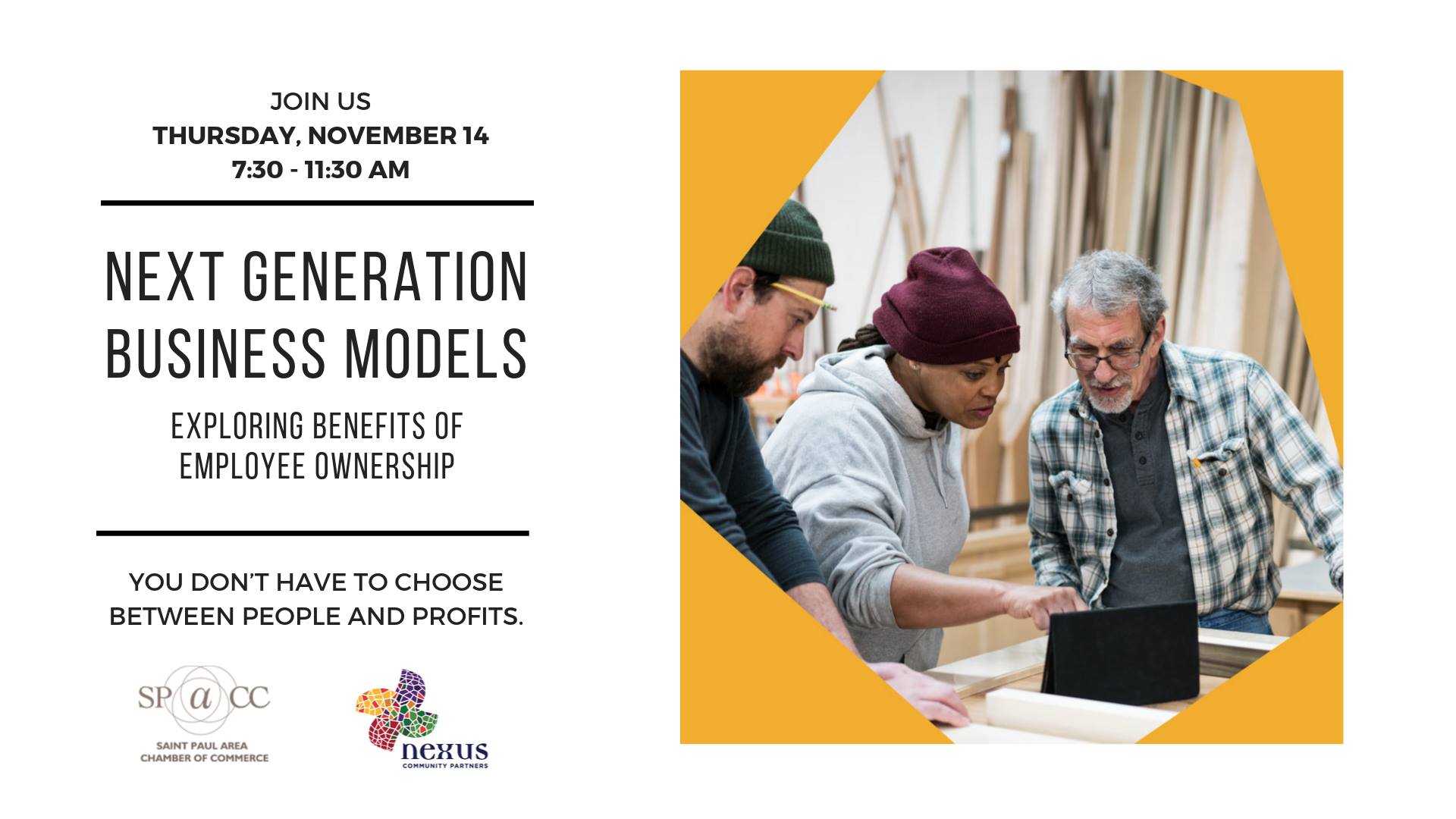
Nexus Community Partners and the Saint Paul Area Chamber of Commerce (SPACC) are partnering to host an event to highlight options for retiring business owners to sell their enterprises to their employees. Businesses transitioning to employee ownership are a trending alternative in business succession.

Two thirds of small businesses listed for sale never sell, and only 15% are passed on to family members. Acquisitions by larger firms or out-of-state buyers often lead to layoffs and restructuring. But a local buyer may be closer than you think! Join Nexus Community Partners and SPACC for our upcoming event Next Generation Business Models: Exploring Benefits of Employee Ownership and find out why more and more employers are securing their company’s legacy by selling to the employees who helped to build it in the first place!

The event is an opportunity to learn from companies that have transitioned to employee ownership including Terra Firma Construction and Isthmus Engineering. We will also hear from industry experts including: Equal Exchange, Dorsey Whitney Law Firm, and Project Equity.

To register for the event, click here.

Here, is access to the Facebook Event.

Thursday, November 14, 2019 7:30 AM – 11:30 AM CST

Sunrise Banks – The Bridge

2525 Wabash Avenue

Saint Paul, MN 55114

Cost: $35.00, Breakfast included.

Keynote speaker : Ole Olson, Engineer, Isthmus Engineering & Manufacturing.

Agenda and panelists to be announced soon!


After 15 years at Nexus, Terri Thao reflects on career, communities, and change. This profile is part of Nexus 15th Anniversary series. Look out for more pieces journaling our evolution as an organization. 
Words by: Nichelle Brunner

The white walls are lined with vibrant photos of her children, community elders, and moments in social movements and protests, such as the Black woman being detained during the Alton Sterling protests in Baton Rouge, LA. Pinned on a corkboard is a large button that reads, “I am making St. Paul better,” and Terri is doing just that. 

For Nexus Community Partners’ 15th anniversary, I was able to have a conversation with Terri Thao, the Program Director of Boards and Commissions Leadership Institute (BCLI) and someone who has been with Nexus since it’s beginnings. 

In our hour long conversation, we discussed Nexus’ origin story, community advocacy and sharing power, and Terri’s plans for the next 15 years. 

The beginning: from Payne-Lake to Nexus 

For Terri’s first two years, the organization was known as Payne-Lake Community Partners. 

“So it’s 2002 and I graduate with my Master’s degree from Humphrey, and the job market is crappy. I saw a job opening at Wilder for a Program Associate with Payne-Lake Community Partners. I applied and I was the second employee to join after our executive director.” 

Payne-Lake Community Partners was created out of a national project to address the gaps between BIPOC (Black, Indigenous, People of Color) and White residents in four cities: Baltimore, Chicago, Miami, and the
Twin Cities. While addressing the gaps, Payne-Lake staff realized they had to expand beyond the Payne and Lake communities. 

“This was work I had been doing all along, while growing up, but we were asked to do work that was beyond the city limits. We realized the key word in our name was community. The people in the communities are the key because we could find 19 organizations that fund housing, but those 19 organizations were not funding people and families,” she said. 

Understanding the need to support people and families outside of the Twin Cities, Payne-Lake Community Partners became Nexus Community Partners in 2010. After discussing the name change, Terri began to recount her title changes while at Nexus.

“I started as the program associate and I basically did everything the ED didn’t do,” Terri said. “It was just two people then and it was really quiet. Then in 2008, I became a program officer, where I had a portfolio of grants and initiatives. We also hired Rachel, who was an admin person, and Theresa [Gardella, Vice President of Programs and Operations]. Theresa started the week I was going on maternity leave and it was basically, ‘here’s this and this and bye’,” she said laughing. 

With the addition of more staff, that brought the total to four; however, Terri did not adjust to the changes easily. 

“Learning to grow was hard for me and I’ve had a professional evolution at Nexus. In 2011, I became the Program Director of BCLI. By then the staff size grew a little more, then it was 8, and now we’re 16 and I’m amazed at all of the growth.” 

Creating a legacy

As our conversation continued, we discussed Terri’s favorite memories and projects. When discussing her favorite memories, they many times aligned with her most memorable projects. 

Some of the organizations that Terri is proud to see grow are African Development Center (ADC), Latino Economic Development Center (LEDC), and African Economic Development Solutions (AEDS). Nexus and Terri’s work was also instrumental in the growth of commercial corridor Midtown Global Market on Lake Street. 

“We were at the forefront on the work around engagement. We learned so many lessons from our Lake Street developments and support and engagement was one. We took chances and funded folks that no other funder would. Bringing folks along with me and having an impact in the communities is why I do this. We trust the people,” Terri said. 

Terri cites Nexus’ trust in community and people the reason for Nexus’ transformation. 

“I don’t see this work as just me. You need to understand power and sharing power. I always think about legacy in this work because so many people do it for a short time.”

Looking ahead: the next 15 years 

As we concluded our conversation, I asked Terri to reflect on things she’s learned over the past 15 years. She laughs before speaking. 

“I’m always learning and everything is a lesson. But I would say to listen more than you speak and do deep listening. Bring folks along with you. There’s cheesy things like do good work, but also inspire. Share your a-ha moments and share it in the context to inspire others.” 

When she reflects on the next 15 years, Terri has big plans for herself, her family, and her community. 

“I’m optimistic about the future. I want to travel. I’m hoping to still be effective but hope folks are being more real. My kids will be adults and that will be trippy, but worrisome…I don’t know, maybe I’ll write a book. I like to be challenged in my work, so I’m always thinking about the legacy I’m leaving now. I want to meet new people, eat good food, and there will probably be 49 new Marvel movies,” she said laughing. 

Terri pauses and is hesitant to say her next goal. “Is it foolish to say liberation? If you asked my ancestors, they would’ve never imagined this. We were these hillbillies in Laos. So it might be crazy to say, but we build the world we want to live in.”
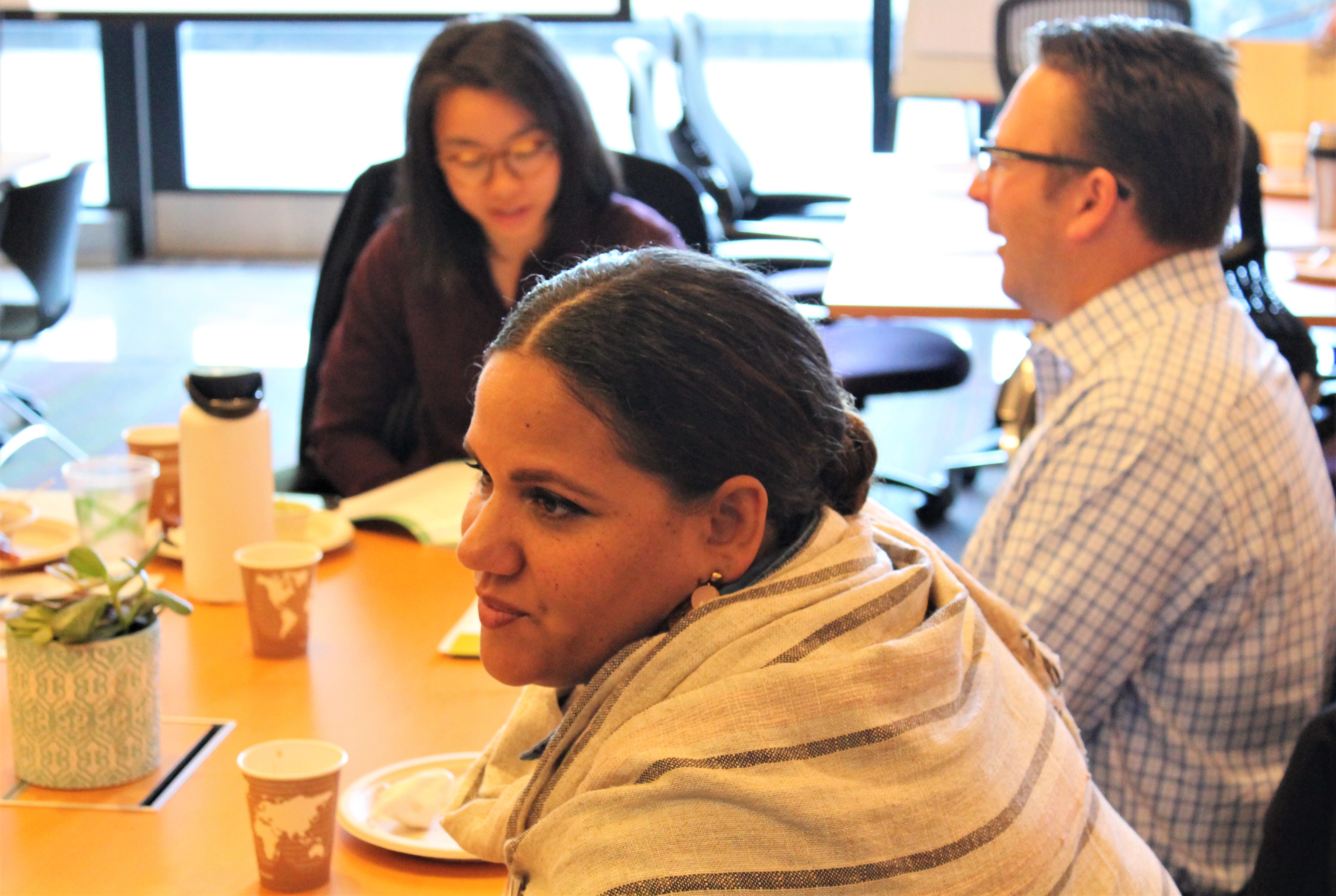
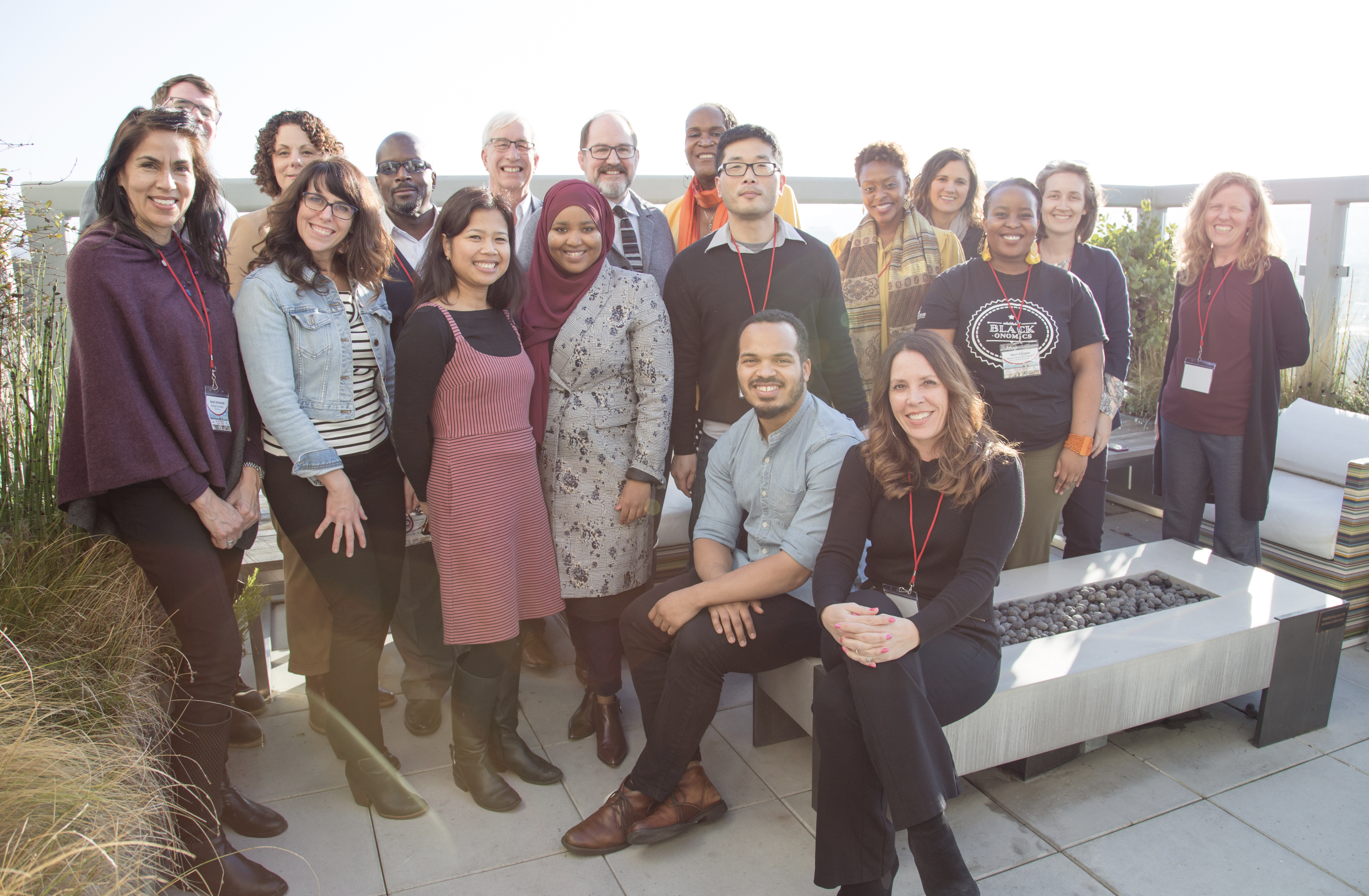
 

Nexus’ Worker Ownership Initiative and partnership with the St. Paul Area Chamber of Commerce was recently featured in Finance & Commerce:

“Cooperative ownership is a solution both to the challenges facing small businesses and to larger problems in the economy…Elena Gaarder, Director of Community Wealth at Nexus, says, ‘For us, this presents this really once-in-a-lifetime opportunity to move where the bulk of the wealth is held in our country and create so many more opportunities for ownership'”

Sixty percent of small business owners were born before 1964, according to the University of Minnesota. Nexus and the Saint Paul Chamber of Commerce are working together to address the ongoing wave of baby boomer retirements, keep businesses local, and build cooperative ownership. Read the full article here!

Learn more about the Worker Ownership Initiative (WOI) here!

By Janice Barbee, Founder and Director of Healing Roots, Member of Nexus Community Engagement Institute Advisory Committee—DOWNLOAD REPORT HERE!

More and more organizations are realizing the benefits of engaging with the people they serve.  They’re becoming interested in what authentic engagement can achieve, beyond surveys, focus groups, and advisory committees.  Such methods are typically used to get responses to what an organization is doing or plans to do, but do not do a good job of discovering what is on the minds of community members.  Organizations miss out on a tremendous amount of information, creativity, resources, and problem solving when they limit the flow of information between the organization and the communities around them. This flow of information is powered by the quality of the relationships between people in the organization and the community.

Small community organizations are typically best equipped to engage with community members, but large organizations can also reap tremendous benefits by engaging with diverse communities.  Nexus Community Partners worked with a local hospital system over a one-year period to support the organization to engage more effectively with the communities it serves. This partnership yielded new knowledge, understanding, and ideas about what is needed for any large organization to better understand community engagement and integrate it into their work.

Leadership Training

For this learning series, a cohort of about 12 senior executives and managers from many different areas of the organization, from Medical Director to Vice President of Marketing, were invited to participate.  They met every month for a two-hour session for 10 months to learn about community engagement and how to implement it in their organization. The organizers of the trainings were strong leaders within the hospital concerned with diversity and inclusion and they had worked hard before the training to make the case for engagement. The result was that the participants were eager to learn more about it.  They all had some sense that deepening relationships with the diverse communities they serve would help them to better achieve the hospital’s goals.

At the conclusion of the series of trainings, the participants were committed to community engagement as a valuable approach towards achieving their mission. They agreed that it is crucial for leadership to understand community engagement in order to spread the practice and its principles throughout the organization. The leaders were in a position to support each other, through membership on committees and workgroups, and to apply their understanding in their own work and the hospital’s policies and priorities. The participants concluded that training leaders is a good place to start.

Recommendations:

  • Start at the top with the leaders who have the power to implement engagement practices and respond to community input with changes in organizational culture and policy.
  • Training organizers should meet with potential participants beforehand to make the case for community engagement and should choose those who are interested in learning.Don’t require someone to attend who is not receptive.
  • Implement a long-term training program that engages the participants, ties in to the issues they are addressing, and includes practical ways to implement what they learn.
  • Do not put community engagement in the hands of one department or a few staff, where they often do not have the support to spread this approach to other departments or to inform practice and policy as a result of what has been learned from the community.

Everyone on the Same Page: “Authentic” Community Engagement

The participants expressed frustration that staff throughout the organization does not share a common understanding of what is engagement.  Some had witnessed outreach, where information flows only in one direction, being called community engagement. They realized that their organization needed a common language.  Some participants talked about discovering how different departments were working on projects in the same community without knowing it, and how this had led to confusion and resentment.

Recommendations:

  • Develop a common understanding of authentic community engagement at the beginning of the training, and spread that throughout the organization.
  • Clarify the language for interactions with community, so “outreach” and “community engagement” are understood as both having value according to their purpose, but are not the same process.
  • Commit to multiple trainings of more and more staff until everyone in the organization is on the same page.
  • Create structures in the organization for people to share their experiences and learning, process difficult situations, resolve conflict, brainstorm strategies, and develop new procedures and policies together.

Engagement Leads to Equity

One of the most transformative sessions of the series with the executives was the session focused on equity.  Several in attendance were not aware of the practice of redlining (which denied mortgages to people of color), an example of institutionalized racism and a major contributor to the inequities of today. This session helped people see the connection between equity and engagement, and to realize that staff needs training in equity alongside or even before learning about community engagement.  These leaders learned how cultural communities have been historically excluded, not just from opportunities, but also from the processes for solving the problems that affect them most intensely. They learned how community engagement is not just a way to achieve their organization’s goals, but how it can also be a healing process.  These sessions on equity also shone a light on the organization’s internal equity practices and supported the hiring of more people of color.

Recommendations

  • Include at least one or two sessions on equity in your trainings. Include the history of racism in your neighborhood and the history of the relationship between your institution and communities of color. Interacting with community members without this context can blindside staff when community members bring up past injustices.
  • Make the connection explicit between the need for equity and the need and benefits of community engagement.
  • Allow for both personal and professional exploration of this topic. These discussions can challenge people’s identity and understanding of their own history and can bring up strong emotions. Use experienced facilitators that can create safe spaces where people can reflect, express and understand their emotions, revise their understanding, and integrate their new learning.

Setting Priorities and Expectations

Several of the members of the cohort expressed frustration during and after the trainings on the difficulty of implementing the principles of community engagement.  They saw staff trying to do as much as they could and getting discouraged that they weren’t seeing a lot of positive change. They realized that top leadership needed to set priorities, to create a coordinated effort to make change in a focused way. Participants also told stories of engagement efforts that had backfired because the community members wanted things that the organization couldn’t provide.  Their reflection revealed disconnections, inefficiencies, and weak links within the organization that need to be addressed.

Recommendations

  • Set priorities for your staff for community engagement efforts.
  • Support staff to communicate with each other and to make sure that what is learned from the community makes a difference in the organization.
  • Make sure staff is trained to be explicit with the community about what they can and cannot do.

Time

The shortage of time, tight timelines, and over-stuffed schedules were a constant theme throughout the trainings. Members of the cohort expressed frustration that they don’t have the time to build relationships in the community and maintain them.  Too often, they said, one staff member has established relationships with a community only to leave within a couple of years.  The next person has to start from scratch. The leaders also talked about the limitations of their advisory committee, where representation of the community was extremely limited, and the meeting process did not afford the opportunity for creative input from community members.

Recommendations

  • Do not expect a one-time training to be sufficient. As with any training that seeks to produce a shift in culture and understanding, this is a long-term process. Build in multiple trainings over several months with time for debriefing and follow-up.
  • Allow time for several staff members to build relationships in the various communities your organization serves. Don’t let all the responsibility rest on one person’s shoulders.
  • Not every meeting with community members needs to have a task to complete; the goal is to build relationships and trust.
  • Develop many ways to build relationships between multiple staff and community members, from one-to-ones, to personal interviews, to listening circles, to community dinners, meetings, and other events.

Changing “Old” Thinking

Many times during the trainings, the members were confronted with examples of old, entrenched ways of thinking getting in the way of learning and applying new knowledge.  They realized that many of these ways of thinking are deeply engrained into the organization’s culture, are extremely difficult to change, and need to be constantly challenged.  The participants in the cohort named several examples of “old” thinking that get in the way of integrating community engagement into the organization:

  • Lack of awareness of one’s culture: People operate from a “default” way of thinking, which assumes that their culture and ways of doing things are “just the way things are.”They need more awareness of the assumptions and beliefs of their own culture.
  • The expert /professional model in our society teaches that the staff should be the ones to solve the problems. Staff may feel a tension between what is expected of them as professionals, community members’ perception of them, and their ability to act as a resource and liaison for the community.
  • Being professional often means one needs to be “objective” and detached and it can be considered inappropriate to express emotion in one’s workplace. One of the most memorable sessions in the hospital cohort was when the participants were asked to share an experience of being in community when they were growing up.Many stated that this was the first time that they had shared personal stories with each other in the many years they had worked with each other, and it bonded them together in ways they never had before.

Recommendations

  • Include trainings on cultural awareness and cultural identity. Trainings that challenge attitudes and perceptions require both personal and professional work. In our individualistic society, people often don’t realize how much their culture is the “water” through which they understand the world.
  • Allow for people to express emotion, to tell personal stories, and to bring their full selves into the discussions. Giving space for this can transform attitudes and practices more effectively than words can. Strictly professional relationships don’t build trust and transparency. 

Don’t Stop the Conversation

The participants in these trainings are very committed individuals who want to do what they can to lead their organization to do a better job at improving health and preventing illness. They took a lot of time over 10 months to learn about the power, principles, and potential of community engagement. The hope for the trainings was that, because they are leaders in the organization, they were in the best position to apply this learning and spread it throughout the organization.  They are doing this to the best of their ability, but they also realize that this requires a cultural shift. It takes challenging some entrenched ways of doing things; it requires a re-alignment of values and incentives. Just as community engagement takes time, so learning about it and how to integrate it will take time.  Trainings on engagement and equity are investments in a future where everyone has a voice and the opportunity to make positive change for the common good.

Recommendations

  • Create structures for senior leadership to regularly re-evaluate procedures, incentives, practices, and policies in the light of both what staff are learning from the process of engagement and from community members.
  • Regularly ask your staff what they need to better understand in order to serve the different communities and accomplish your organization’s mission. Continue to offer trainings and workshops accordingly.
  • Keep asking questions such as:
    • What is not working, according to community members?
    • Who else do we need to hear from?
    • What does the community want us to do that we’re not doing?
    • How could we support community members to strengthen their community?

Janice Barbee is the director and founder of Healing Roots, and has the honor of being named an Elder in our European American community. She is currently a consultant in community engagement and an adjunct instructor at the University of Minnesota, teaching on culture and health. She designs and conducts workshops for organizations who want to better understand culture and respectfully and productively engage with people of different cultures.

“I’ve come to believe that you cannot change any society unless you take responsibility for it, unless you see yourself as belonging to it and responsible for changing it.” – Grace Lee Boggs

Sida has been on the Nexus team for a little over a month, having recently left the public sector where she worked to advance health equity. She joins us as the National Community Engagement Program Manager for the Leadership and Learning Initiative (LLI). The LLI is a national initiative of the Robert Wood Johnson Foundation (RWJF) and is a partnership between Nexus Community Partners, Amherst H. Wilder Foundation, and Gray Hall Evaluation Consultants. 

The Leadership Learning Initiative

The initiative aims to understand and better support community-driven leadership for health equity as a Culture of Health expands across communities, organizations, partnerships. The LLI aims to be “an immersive learning experience” that will challenge assumptions about leadership and accountability. In Sida’s words, “community-centered leadership is constantly shifting and evolving because our identities and our communities, who we belong with and to, is contextual and fluid.” 

The initiative will rely on everyday leaders to help us define leadership, health and well-being in their respective communities. Though the partnership and with an ecosystem of health equity leaders, we will explore these key questions: How do we, as institutions and individuals, define and express community-driven leadership? How do we reinforce and reimagine leadership that supports community well-being? 

Even in this early stage as we explore these questions, more questions emerge: How does one foster a culture of health, both theoretically and specifically? What does leadership look like in different contexts and how could it look in the future? How do we support and understand a community-centered worldview?

Reimagining, unlearning, and leaning in

For Sida, it has been exciting to challenge assumptions while co-creating with people who “have been thinking deeply about the intersections between adaptive leadership and community engagement.” In fact, that collaborative journey of discovery, where no one individual has the answer, is the most exciting part of the work for her. 

So far, Sida has been energized by her new work environment and the deeper connection between health equity and racial equity. Also, it has been exciting to be in a different work culture at Nexus where “the things you find fun and funny aren’t separated from your 40 hour [work] week.” She sees bringing more parts of herself and her lived experiences into the work as a chance to reimagine, unlearn, and lean into other ways of being. 

In her free time, Sida spends time with her family, where, instead of making plans, they let life take them where it may. She has particular excitement around fishing, which is “the intersection of everything [she] like[s] including: sustainability, being outside, the environment, eating well, cooking, and dissecting things.” She once had a 14in arowana in her home aquarium and dreams of an aquaponics system in her future Hawaiin home. 

On Thursday, April 4, 2019, Nexus Boards & Commissions Leadership Institute (BCLI) graduated its sixth cohort at the Bullard Rainforest Auditorium in the Como Zoo’s Visitor Center. With the addition of these year’s 16 fellows, Twin Cities BCLI has a grand total 85 alumni.

Similar to previous BCLI graduation ceremonies, Nexus President and CEO Repa Mekha officially welcomed everyone, and BCLI program director Terri Thao provided highlights from the 2018-2019 program year. Minnesota Lieutenant Governor and former BCLI trainer Peggy Flanagan provided opening remarks about the value that indigenous people, people of color and underrepresented groups bring to policy-making tables from which they have been historically shut out. She discussed the need to lift up more voices especially on boards and commissions at all levels of government. She stressed the importance of people who are most impacted being at the tables instead of being removed from the conversation.

After the Lieutenant Governor spoke, two graduating fellows Jamaica DelMar and Vincent Henry shared their personal stories and touched on the way the BCLI has inspired their confidence, reinvigorated their drive to get on boards, and do impactful work in community.

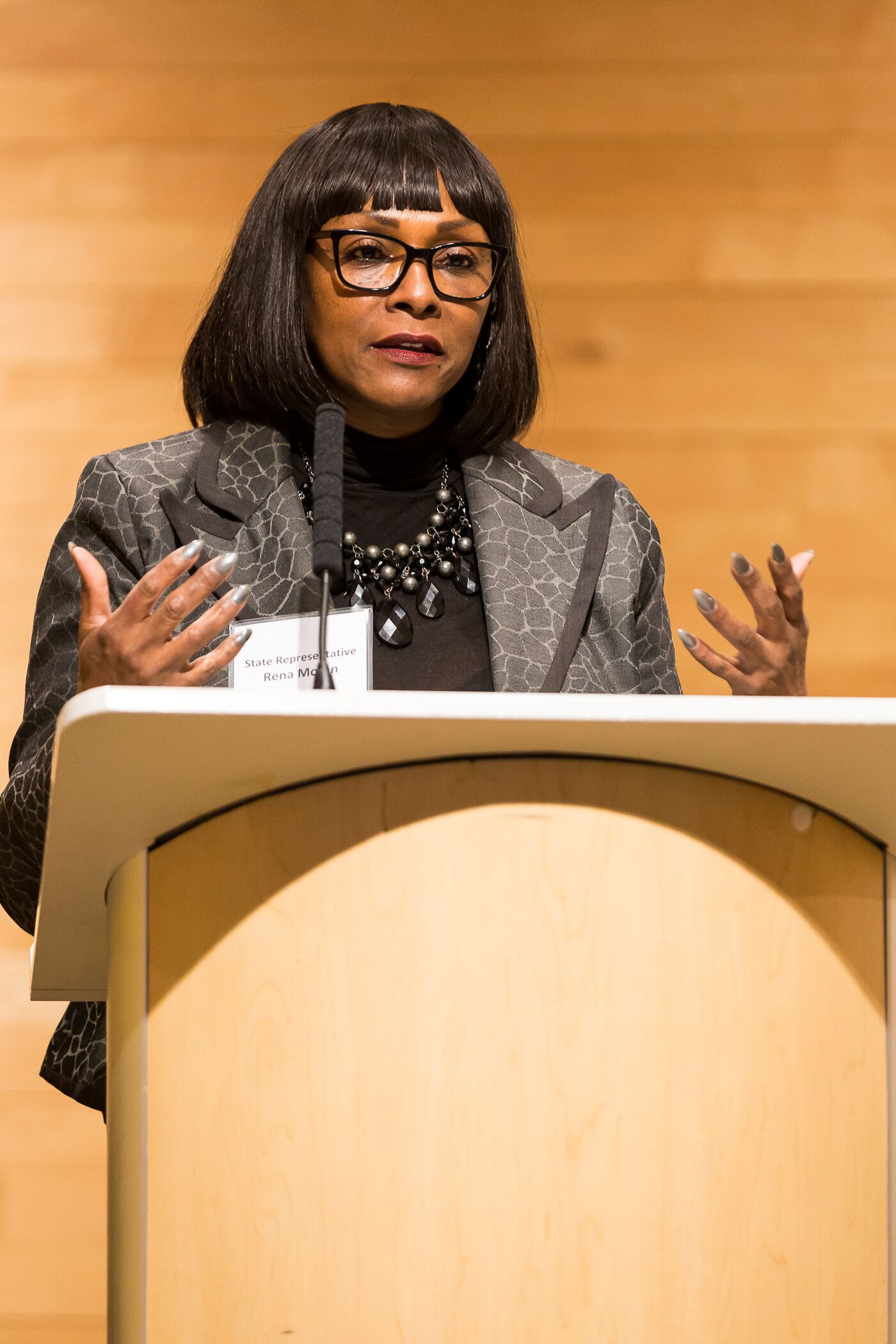
The keynote address was given by Minnesota State Representative Rena Moran (DFL-65A) of Saint Paul. Representative Moran talked about the importance of bringing each other along and holding each other accountable in the work we do in community and at policy tables. She reminded the fellows that this work often begins with one of the basic steps of organizing: conducting one-on-one’s with your colleagues to get a better grasp of who they are, what matters to them, and understanding the larger landscape.

Both speakers also shared a common message in their remarks—we need as many leaders of color and indigenous leaders as possible in racial and economic equity work. Both expressed appreciation for the work of the BCLI and other programs which prepare POCI folks for leadership positions in larger systems where they will represent community and bring equity to the table. The evening ended with BCLI fellows being honored with certificates and a poster from local artist Ricardo Levins Morales. Nexus is grateful to all of the alumni, friends, family and funders who helped make this year’s graduation a success.

“I do a little bit of this, a little bit of that”

While Chalonne joined the Nexus family almost two years ago, she is just settling into a new role with the Nexus Community Engagement Institute (NCEI)—National Community Engagement Program Manager. In the position, Chalonne provides guidance around community engagement to folks across the country while also facilitating local events.

Her national work focuses on the MacArthur Foundation’s Safety and Justice Challenge. This initiative aims to reduce the number of people incarcerated across the US at over 50 sites across the country. After several years of advocacy by NCEI and others, MacArthur is in the early stages of shifting to a community engagement-centered approach, specifically focusing on currently and formerly incarcerated people and their families. As a new member of the team, Chalonne is working with sites to develop and implement community engagement strategies.

Lessons Learned about Community Engagement

Giving community money isn’t as risky as people think. Millions of dollars have already been invested in eliminating disparities between white communities and black, indigenous, people of color communities, to little avail.

“What’s the bigger risk? Continuing to fund things the way we’ve been funding them and getting the same results? It feels more risky to keep doing the same thing. Instead, we need to consider how to actually get money into the hands of communities. How might we allow communities to drive how this funding is spent?”

For example, in Philadelphia, a criminal justice innovation fund has been established to provide microgrants to community-based organizations working on jail reform. Additionally, this site established an community advisory council with a paid staff person and financial resources for advisory members. This would not be possible without the supplemental community engagement funding from the MacArthur Foundation to select Safety and Justice Challenge sites. While people have concerns about what might happen if community, instead of institutions, were given money, the worst case scenario is that issues like mass incarceration stay the same.

What is Energizing about the work?

Chalonne gets life from all of the people doing community engagement, the way they hold events, and how they share space and power. Especially energizing are informal, grassroots spaces that engage individuals and families across generations. Being a part of a family with five living generations, her vision for the future is that families of multiple generations will have more opportunities to be engaged together in their communities.

As much as she wishes that she could “snap my fingers and put an end to the unjust systems,” she knows that it takes work, creativity, and engagement. “We have to usher out this system, and usher a new one in. That will take time and all of us engaging in the changes we want.”

When Chalonne isn’t traveling the country doing community engagement, she works on cooperative initiatives in the North Star Black Cooperative Fellowship, she is a magical and gifted facilitator, and she is a certified IDI consultant and coach. She also enjoys all the laughs, drama and joy of a large and beautiful family.

Saint Paul, Minnesota— On Wednesday, March 6, Nexus staff member Chai Lee was sworn in to serve on the Metropolitan Council (The Met Council), representing District 13, which includes the eastern half of Saint Paul, Lilydale, Mendota Heights, Sunfish Lake and West St. Paul. Lee is a program coordinator for the Boards & Commissions Leadership Institute (BCLI) at Nexus. He joins 15 other members of the Met Council being sworn in March 6. The 16 members appointed on March 6 represent the 16 districts of the Met Council, which covers the seven county metro area. The chair of the Met Council, Nora Slawik, makes the 17thmember of the body, but is not appointed by geography. Chair Slawik was recently appointed by Governor Tim Walz to lead the council and is the former mayor of Maplewood, MN.

The Metropolitan Council is the regional policy-making body, planning agency, and provider of essential services for the Twin Cities metropolitan region. It is a unique regional body unlike any other in the nation, whose roots date back to the 1960s, and was created with bipartisan support by the governor and legislature of Minnesota. The appointments were made by Minnesota Governor Tim Walz and Lieutenant Governor Peggy Flanagan, from a pool of over 200 applicants.

“I am humbled and honored to be appointed to the Met Council by Governor Tim Walz and Lieutenant Governor Peggy Flanagan. I will do my best to bring to the table divers perspectives as I reach out and work toward engagement between Council staff, advisory boards, and my deep community relationships. Most of all, I am proud to be at the table as someone in coming into this work from the unique viewpoint of Nexus, and the nonprofit sector, as well as my local government experience,” says Lee. “What I look forward to most is the opportunity to work on issues which impact all our communities so deeply, from planning for economic opportunity to affecting affordable housing and improving our infrastructure, I will work hard to strengthen the national and global competitiveness of our metro region through my work on Met Council. I am so proud and lucky to be working at Nexus, and my work and passion in diversifying boards and commissions will continue, and I can’t wait to help affect that as a Met Council Member as well,” Lee continued.

Lee brings many years of community involvement to the table. He has served on his neighborhood board, District 1, on Saint Paul’s east side, as well as a three-year term on Saint Paul’s Long-Range Capital Improvement Budget Committee (CIB), which is a board that reviews, ranks and recommends capital projects to the city.

The newly inaugurated Met Council is the most diverse class of appointments in its history, and Lee will be the second Hmong person ever to serve. Prior to coming to Nexus, Lee worked in the administration of Saint Paul Mayor Christopher B. Coleman. Learn more about theMet Council and its geographical districts here. An official bio of Lee can be found here, and he may be contacted at: chai.lee@metc.state.mn.us

Written by Nkuli Shongwe 

The Humanist Philosophy of Ubuntu was introduced by Archbishop Desmond Tutu, a South African cleric and theologian, one of the main Leaders of the South African anti-Apartheid, and Human Rights movement. One of the many meanings of Ubuntu is: I am because we are. The word holds a meaning of collectiveness and interconnectedness in humans. The humanist philosophy can be used to advocate for the economic and social justice through cooperative economics for people who identify as identify as women, LGBTQIA, African, and African American. Economic justice is a tool that promotes sustainable economic growth and restorative community wealth in historically marginalized and continuously exploited communities.

It’s been a year since I was introduced to the cooperative movement. Before that, I never thought much of co-ops, I barely knew of co-ops- in the formal sense.  I was fascinated with cooperatives and became interested in learning more about their history. I had this burning question about the first coops and where they were established. As I was doing more research to familiarize myself, I quickly discovered that most of the information I found online and the narrative in the coop world  stated that cooperatives started in Europe in the 19th century and  the Rochdale pioneers were  established  as pioneers whole catapulted the  modern cooperative movement in the 20th century.

During my research, I was introduced to Dr. Jessica Gordon Nembhard’s book, Collective Courage: A History of African American Cooperative Economic Thought and Practice. Dr. Nembhard’s book is the only book written in the 21st century about African American cooperative business ownership and its place in the movements for Black civil rights and economic equality. It is one of two books ever written recollecting the history of black cooperatives. The only other text in existence W. E. B. Du Bois’s 1907 Economic Co-operation Among Negro Americans.

What was fascinating about Dr. Nembhard’s book was the she debunked the dominant narrative about the establishment of the first cooperatives. She details incredible history and stories proving that African Americans have had a long-rich history of cooperative ownership driven by market failures and racial discrimination that predates that cooperatives established in England during the 19th century. The revelation came when I read that coops were not always formal structures. There were many informal forms of cooperating that were powerful such as the underground rail road, programs led by the Black Panthers,  mutual aid societies, tilling kitchens- and list goes on.

Essentially we have been cooperating as since the beginning of time. After pouring, through the research and learning more about the informal coop structures used  and how they were used for survival, I began asking myself- where are my people in this story? Do my people have a history of cooperating and where can I find this history and information. I put in the words South African coops in google and google scholar and I was met with an extensive list of formal cooperatives existing in all  provinces in South Africa.

I was astonished and found myself going down rabbit holes. Once I pulled myself out of the rabbit hole, I thought of   the informal ways of cooperating and the list was also endless. I thought of family weddings or funerals where all the mothers and women of the family would gather to make a beautiful feast. Each woman would have a task from cutting the vegetables or meat, cooking, plating up, and washing the dishes- there were no formal procedures. Women would come together and contribute where they were needed. I thought of stockvels- invitation only clubs of twelve or more people serving as rotating credit unions or saving scheme in South Africa where members contribute fixed sums of money to a central fund on a weekly, fortnightly or monthly basis. Stockvels have been around since the 19th century and were used fight against colonialism.

The philosophy of UBUNTU is prevalent throughout the cooperative movement and the fight for economic justice. Cooperatives use a human based approach to build community wealth.  Cooperation is driven by trust, care, and empathy for each other.  The cooperative movement encourages us to participate in a liberatory economy that is regenerative and works to actively challenge a racialized and gendered economic system.

What does it mean to center culture in community engagement? How do our cultural identities impact our relationships in community? How do we get closer to our own stories in order to move away from extractive relationships toward reciprocal relationships?

On November 1st, 2018, Nexus Community Engagement Institute (NCEI) hosted the final Engaged Learning Series of 2018 to explore: What’s Your Story? How Identity & Culture Impact Community Engagement.

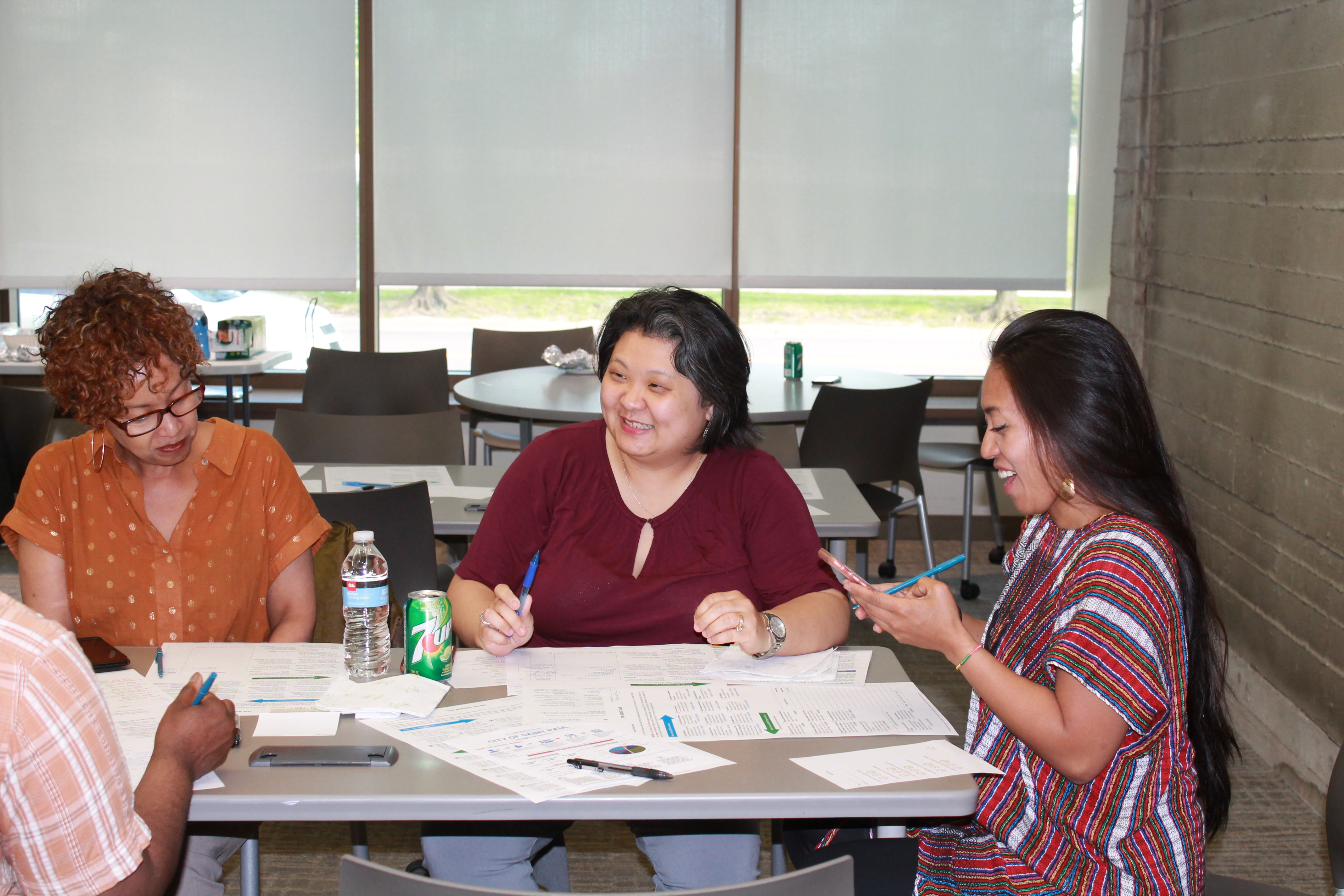
Introductions at tables began with creating and sharing I Am Poems, many of which were left to share back with the group.

Panelists Bilal Alkatout, Roxanne Anderson, Vina Kay and Susan Phillips spent the second half of the session sharing how personal identities have influenced how they are engaged, and how they engage others in community. Listen to the video below to hear their I Am Poem introductions. 

Following introductions, NCEI program director Avi Viswanathan asked the panel three questions followed by audience-panel Q&A. Check out the videos below to hear their responses to each question.

Question 1: What does it mean to you to center culture in community engagement work? What identities are you drawing from?

Question 2: How have your cultural identities been impacted by or impacted others when engaging community – either negatively or positively?

Question 3: What advice would you give to this group to build authentic relationships centered in identity and culture?

Audience-Panel Q&A:

This Engaged Learning Series was a brief two and a half hours to begin the discussion about centering culture and identity in community engagement. Feedback from the group included a need to further explore cross-class perspectives and deeper discussion around the impact of white supremacy in community engagement. We hope to continue supporting each other at future Engaged Learning Series in these topics as well as other opportunities and challenges in community engagement.