For the past five years, the Bush Foundation, NDN Collective, and Nexus Community Partners have been working together to address racial wealth disparities for Black and Native American communities in our region. Together, we have been learning a lot about what is needed to do shared decision making—and to share power—well.
Where We’ve Been
In March 2021, the Bush Foundation committed $100 million to seed two community trust funds to address wealth disparities rooted in the lasting impacts of historical race-based U.S. policy. These funds invest directly in Black and Native American communities across Minnesota, North Dakota, and South Dakota through grants to individuals to support building generational wealth.
Through an open selection process, the Bush Foundation chose Nexus and NDN Collective to design and manage the trust funds on behalf of their communities:
- NDN Collective stewards the $50 million Collective Abundance Fund, providing awards of $25,000 and $50,000 to Native American individuals to support generational wealth-building, including cultural practices, ceremony, language, land and community.
- Nexus Community Partners stewards the $50 million Open Road Fund, providing $50,000 gifts to 100 Black individuals each year through a random selection process, affirming that all people are worthy without requiring proof of need, merit, or hardship.
Where We Are Now
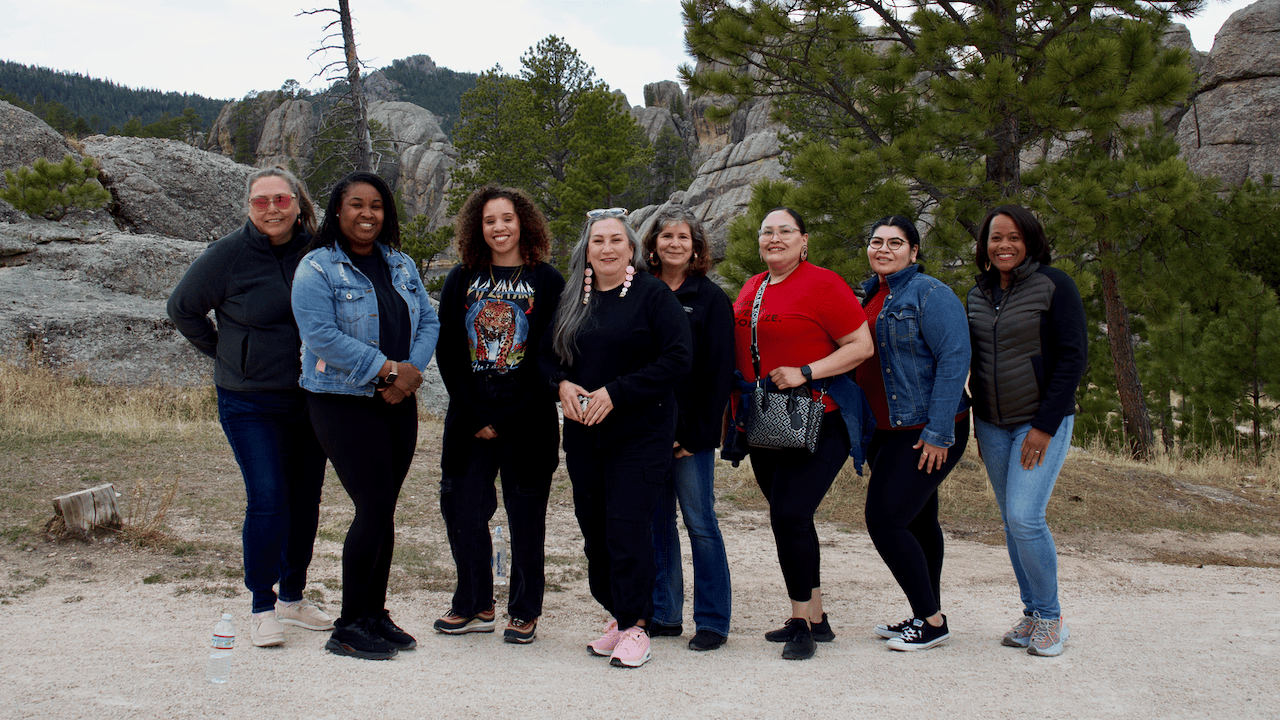
In April 2025, representatives from all three organizations gathered for a two-day retreat. After four years of working together, we were curious about what made this collaboration tick, and what might be helpful to others who want to try it. We asked ourselves: What do we know to be true? What has served and steadied us as we’ve undertaken this work?
What emerged was the following set of shared beliefs that has guided us in our work together:
1) Trust is at the root of the work.
The relationship between our three organizations required understanding of the different forms of power at the table and a high degree of trust. That trust took time and steady intention to build. It did not happen just because we wanted to do this work together.
For Bush, it meant trusting in NDN and Nexus to design grant programs that they knew would best serve their communities. For NDN and Nexus, it meant trusting in community members to know what would most help their families build wealth and to use the resources they received accordingly.
Our approach to evaluation also reflects trust. We are accountable to the communities we serve, rather than conventional metrics. We center learning and trust the stewards to design evaluation plans that will be most informative and beneficial for their work.
2) There’s strength in solidarity.
When Bush selected NDN and Nexus as the steward organizations of this work, there was no requirement or even expectation that the two organizations work together. But from the very first meeting, the chemistry and solidarity between them—plus the Black woman and Native woman representing Bush—was unmistakable.
What has emerged from five years of this partnership has become what the leaders of this work call a practice of co-liberation: a belief that Black and Native histories and futures are tied to one another. And through this partnership, a shared recognition that our communities are brilliant, resilient and capable—and are more powerful together than apart.
3) Building individual wealth can ripple through the community.
Our work together is continually showing us how wealth can be relational and serve a community. It doesn’t have to be about hyper-individualism. What one person builds can serve their family, their neighbors, and the next generation. There can be a ripple effect when we invest in individuals. We have seen awardees start businesses that employ others, as well as examples of awardees hosting community events that feed hundreds of people experiencing homelessness. This is how wealth, even when it’s directed toward individuals, nurtures entire communities.
We also know that wealth is generational, and that today’s wealth gaps reflect past injustices. To address this, we believe that rematriation—a process of reclaiming and restoring something to its rightful place—goes a long way toward closing these gaps and repairing our communities.
4) Our communities define what wealth means.
We believe that communities should define what wealth means for themselves. NDN Collective and Nexus Community Partners did exactly that, and the Bush Foundation trusted those definitions to guide how funds are used.
- Nexus defined Black Wealth as “owning what we produce, and building and inventing for our families and community. It is a creative and sovereign practice of restoration that reaffirms the excellence that has always been in us.”
- NDN defined Indigenous Wealth as “encompassing family and community well-being and the care of relationships—self, family, extended family, community, land and environment. It’s a life abundant in social and cultural sharing.”
Along with trust in communities to define wealth for themselves, the eligible uses of the community trust funds are able to go far beyond what conventional philanthropy allows. The money can support a pilgrimage to Africa. It can support ceremony, language learning, or cultural practice. It can fund a food truck that feeds hundreds, or a home that becomes the foundation of a family’s generational security. If wealth is clean water, good relationships, and the ability to give things away, money is just the tool to get there.
5) This work demands resilience and determination.
Our ancestors survived enslavement, forced relocation, and attempts at outright annihilation. We are here because they did not go quietly. We draw strength from that. We are not afraid to speak clearly about why this work exists and why it matters.
Our communities and this work face threats, fear, and pressure to retreat. We are not stopping, even as the work gets harder to do and more uneven. Continuing the work together, continuing to learn together, and seeing what is possible for our shared futures is what fuels us.
Closing the racial wealth gap is a moral imperative that stabilizes communities and builds a more just and resilient society for everyone. We will continue doing equity-centered, reparative work that addresses the lasting harms of historical injustice. We will protect the people we serve. We will keep telling the truth. We will stand together for the long arc of this work and for the next generation of leaders who will carry it forward.
These belief statements grew organically from five years of relationship, from listening to awardees, from hard conversations, and from the deep wisdom our communities carry. We offer them not as a prescription or blueprint, but as inspiration and an invitation. If you are doing this kind of work—or considering it—ask yourself: What do you believe? What have you learned? What do you refuse to give up? The most powerful beliefs are the ones that grow from the work itself, that are developed and acknowledged together and held with accountability.