Category

When You Vote, You Claim Your Power

Fred

Across the nation, there’s a lot of uncertainty around voter intimidation, restricting methods of voting (such as mail-in ballots), and federal attempts to access state voter rolls, among other efforts to sow distrust in our electoral systems.

In our latest Boards & Commissions Leadership Institute Issue Series session, Voter Outreach Director Melanie Hazelip shared the important role of the Minnesota Secretary of State, and the work their office does to ensure we have safe, free, and fair elections. She urges us to remember: Voting is how you impact the policy issues that are important to you.

“Whether it’s funding for my kids’ school; or who’s gonna fix the roads in my neighborhood; my garbage hauler; immigration issues; climate change; literally everything you can think of these days has become a policy issue. We stand up for those policy issues by our vote, which is then how we stand up for our beliefs. When you vote, you claim your power.

Democracy is not a spectator sport. We really all must participate. Democracy is also not self-sustaining, we’re seeing these days. Democracy’s being tested, and we all have to help perpetuate democracy. We can’t just expect it to continue on its own. Every vote really does count. Every single election, every year in Minnesota, there is at least one race that is determined by one vote.”

Watch the session below!

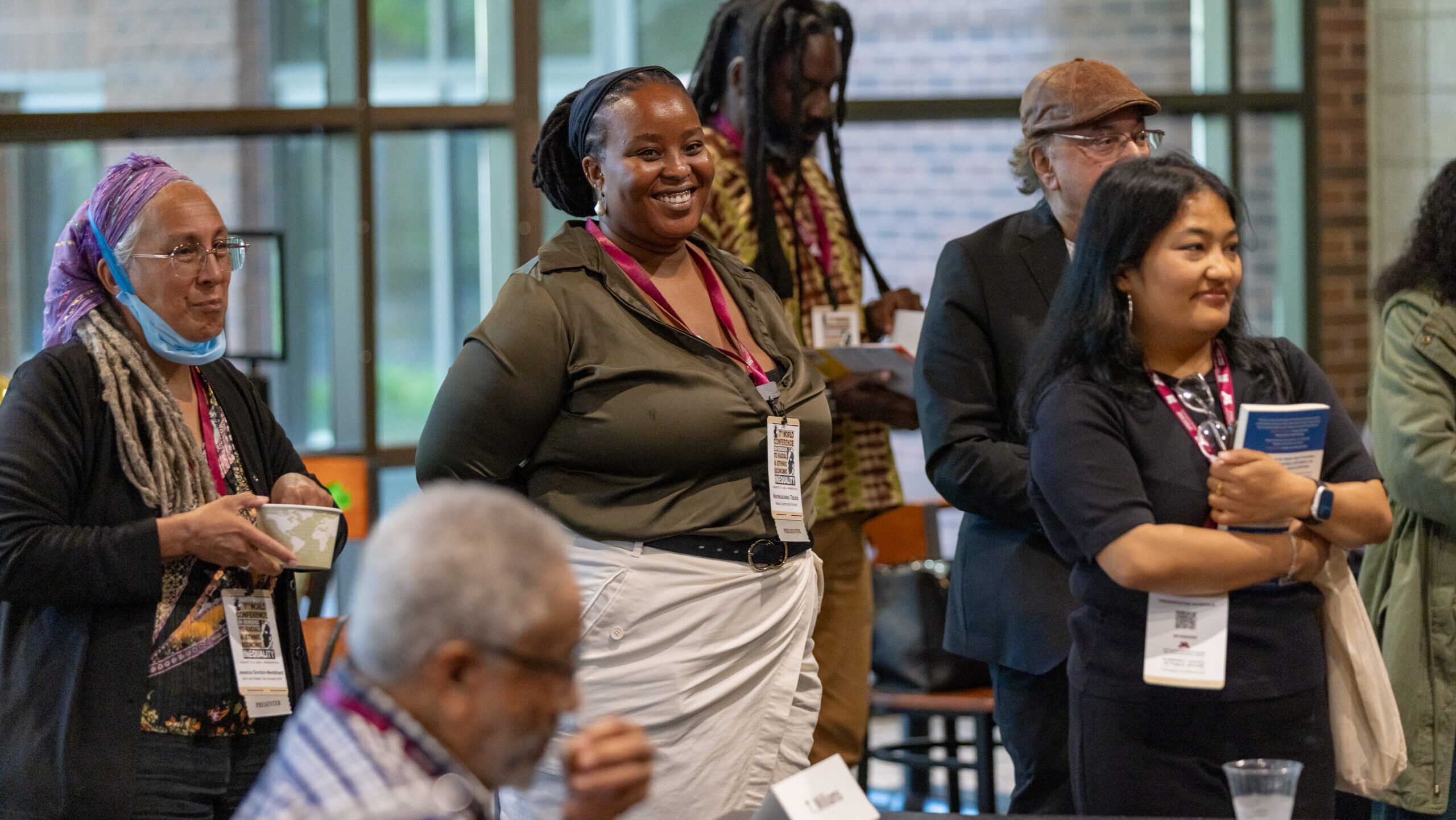
The University of Minnesota’s 7th World Conference on Remedies to Racial & Ethnic Economic Inequality brought together activists, scholars, and leaders from around the world—including many Nexus staff!

“It wasn’t just focused on research or policy,” reflected Nkuli Tabata, Nexus Director of Community Wealth Building. “It created space for people doing the work on the ground to share what they’re seeing alongside academics and decision-makers. It was a chance to learn from one another, build relationships, and have honest conversations about what it takes to create more equitable economic systems.”

Nkuli (center) with other conference participants.

Our Boards & Commissions Leadership Institute (BCLI) presented Leadership and Democracy Building through Boards and Commissions. Our North Star Black Cooperative Fellowship presented From Survival to Solidarity: Reclaiming Cooperative Traditions to Build Collective Futures.

Leadership and Democracy Building through Boards and Commissions

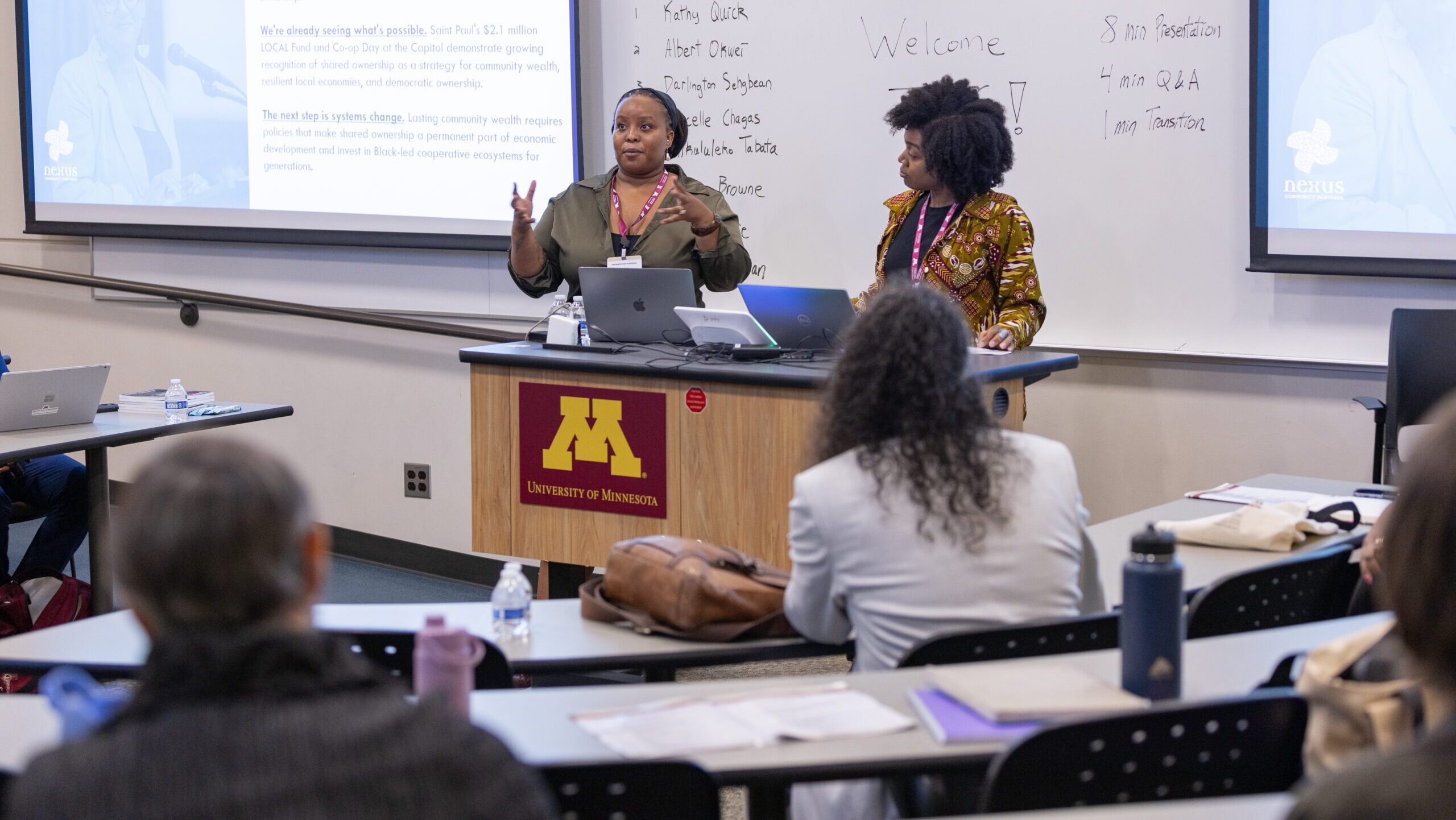
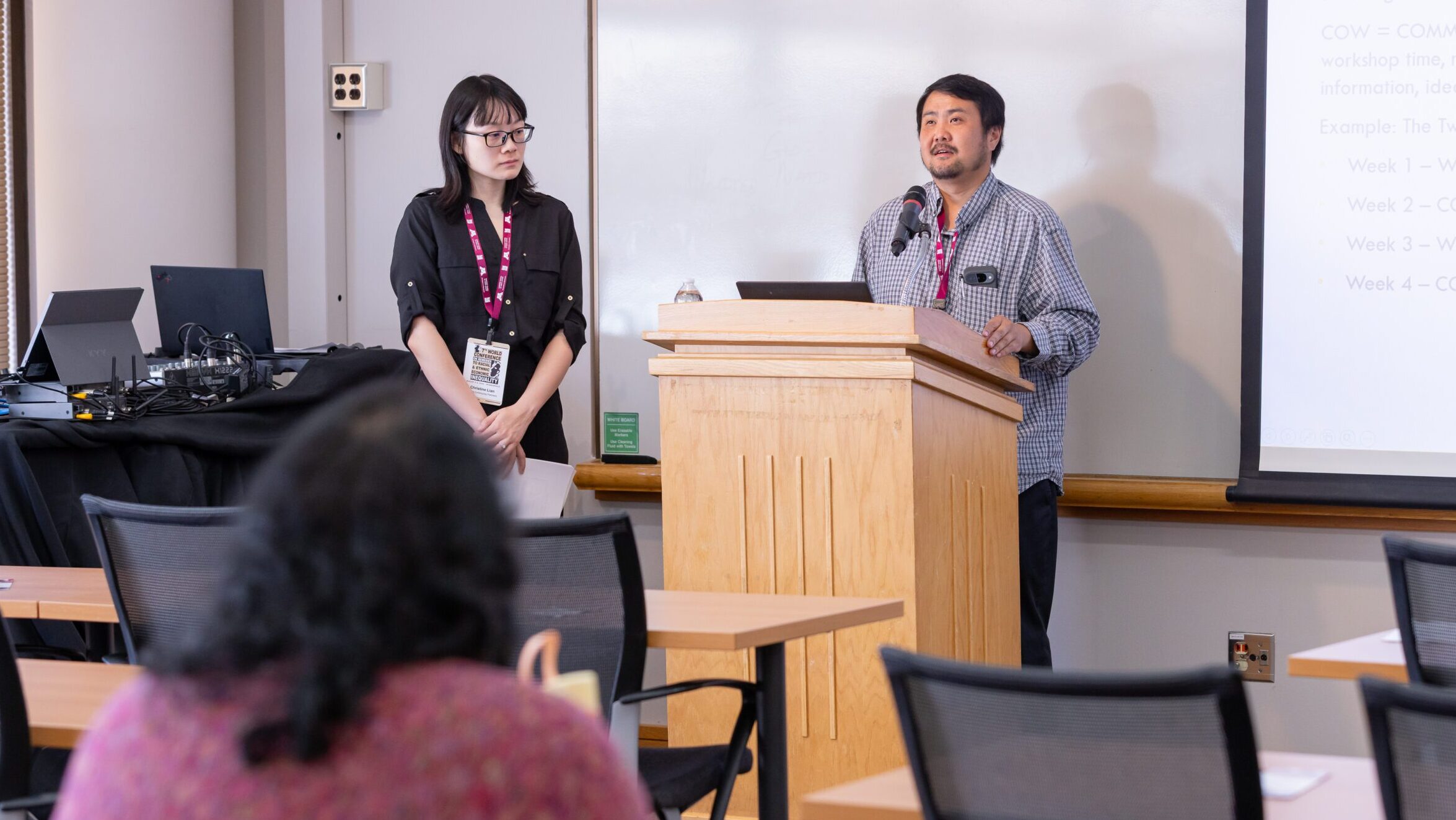
Presented by BCLI Program Director Chai Lee and Program Assistant Christine Lian

Publicly appointed boards, committees, and commissions are a hidden layer of government and political power that most people don’t know about or consider. But public bodies at all levels of government play a critical role in decision-making that impacts your life and every matter of public policy. How do you engage with boards, and how can you affect policy change through service on a board or commission?

Chai (right) and Christine (left) presenting.

Chai and Christine shared powerful stories of BCLI alumni who have affected policy change through board service, highlighting an alum whose work on the Minneapolis Task Force for Earned Safe and Sick Time (ESST) inspired statewide legislation for Minnesota’s laws on ESST a decade later. Chai and Christine gave a Boards 101 breakdown on basic board structures and governance, meeting calendars, positions and titles, and meeting rules and terms. They ended by sharing the story of Minneapolis Mayor Hubert H. Humphrey, who, 90 years ago, used local boards to study racial tensions and acts of discrimination across the city. With the fact findings of these boards and their policy recommendations, he made history passing some of the first municipal civil and human rights laws in the country, and propelled his leadership profile to national prominence.

“Now more than ever, improving civic institutions and engaging broader communities in democracy building are so important,” Chai said.

From Survival to Solidarity: Reclaiming Cooperative Traditions to Build Collective Futures

Presented by North Star Program Director Nonkululeko (Nkuli) Tabata and Program Manager Leanna Browne

Nkuli (left) and Leanna (right) presenting.

“We shared how cooperative development can be a pathway to economic opportunity, community ownership, and self-determination, particularly for communities that have historically been excluded from traditional economic systems,” Nkuli said. “We highlighted the work of North Star and reflected on what we’ve learned about supporting people as they build cooperative businesses and strengthen their communities.”

Key Conference Takeaways

  • There isn’t one solution to addressing economic inequality, but there are shared values and practices that can guide the work. Learning from one another across disciplines and across borders is how some of the most meaningful innovation happens.
  • The people closest to the challenges are often closest to the solutions.
  • We’re part of a much larger movement, and staying connected helps all of us do better work.

Photos by Atomickphotography.

Join our Boards & Commissions Leadership Institute (BCLI) on Thursday, Sept. 10 at 6 pm CT for an Issue Series session on free and fair elections for the upcoming midterms.

Minnesota has one of the most active participation rates of voter engagement in the country. This August, we proved that again by breaking a new record: For the first time in history, more than 1 million Minnesotans voted in a primary. This is 25% of the eligible voter population!

Across the nation, there is a lot of uncertainty around voter intimidation, restricting methods of voting (such as mail-in ballots), and federal attempts to access state voter rolls, among other efforts to sow distrust in our electoral systems. How do we ensure all Minnesotans who are eligible to vote and wish to exercise their rights can do so in free and fair elections?

Sign up to learn ways we can continue to partake in our most sacred civic duties in a democracy. Minnesota Secretary of State Steve Simon and his staff will join BCLI to discuss how to get out to vote safely this November.

Register here


Guest Speakers

Melanie Hazelip

Melanie Hazelip is the Voter Outreach Director for the Office of the Minnesota Secretary of State. She has done voter and civic engagement work since 2016 in a variety of capacities. She believes democracy is not a spectator sport; we all must participate. In her work, she tries to make voting accessible to all eligible Minnesotans. She spends her days talking to advocates around the state who share the same goals. She lives in Saint Paul with her husband, three kids, and two black cats.

Steve Simon

Steve Simon is Minnesota’s 22nd Secretary of State, sworn into office on Jan. 5, 2015. As Minnesota’s chief elections administrator, he pledged in his inaugural address to “work with anyone, of any political affiliation, from any part of our state” to protect, defend, and strengthen the right to vote in Minnesota.

As Secretary of State, he partners with township, city, and county officials to organize elections on behalf of Minnesota’s nearly four million eligible voters, and to ensure that the election system is fair. Simon also oversees a wide range of services for Minnesota businesses and administers the “Safe at Home” address confidentiality program for people whose personal safety is at risk, often due to physical abuse or threats.

His goals as Minnesota’s Secretary of State are straightforward: expand access to voting, remove barriers to voting, make business services as streamlined as possible, strengthen protections for victims of domestic violence and, most importantly, be a Secretary of State for all Minnesotans.

Before being elected, Simon served in the Minnesota House of Representatives for 10 years representing the communities of St. Louis Park and Hopkins. Simon and his wife Leia live in Hopkins with their two children, Hannah and Noah.


This virtual event is free and open to the public. You do not need to be in our BCLI cohort to attend. As part of the Boards & Commissions Leadership Institute, Nexus hosts two Thursday Night Issue Series sessions that include local speakers and facilitated discussions related to service on public boards and our issue areas: economic development, health, housing, transit, and workforce development.

At Nexus Community Partners, we take joy in witnessing what can unfold when people reconnect with their own power. Victoria McWane-Creek has been part of the Nexus community in many ways, and their words invite us to think differently about how change happens.

Written by Victoria McWane-Creek

My relationship with Nexus has shaped me in ways that continue to unfold.

As a Boards & Commissions Leadership Institute fellow, I reencountered the idea that “the state holds the power over life and death.” I rejected that then, and I reject it now. By choosing to arrive in this form (the form of a woman with brown skin) I actively proclaim the right to live, and to live well. Ease, dignity, and harmony are not aspirations; they are an unshakeable truth the state is obligated to uphold. The state must allow that truth to breathe, take root, and grow. My life and my work are an ongoing movement toward that reality.

As a North Star fellow, I confronted how far I had drifted from the Earth that feeds and holds me. Remembering my way back to land, to Earth Mother, required awakening across lifetimes. It meant recognizing that connection, belonging, and nourishment are not privileges; they are my moral, natural, and spiritual birthright.

Through my Open Road Fund gift, I came to understand that joy is also inherited. Just as trauma travels through DNA, so does joy. Experiencing joy, and witnessing the joy of others, heals me, heals my ancestors, and pre‑codes future generations to expect joy and extend it. That is the work I do through Onyx Collective: designing conditions where joy is not accidental, but intentional, communal, and abundant.

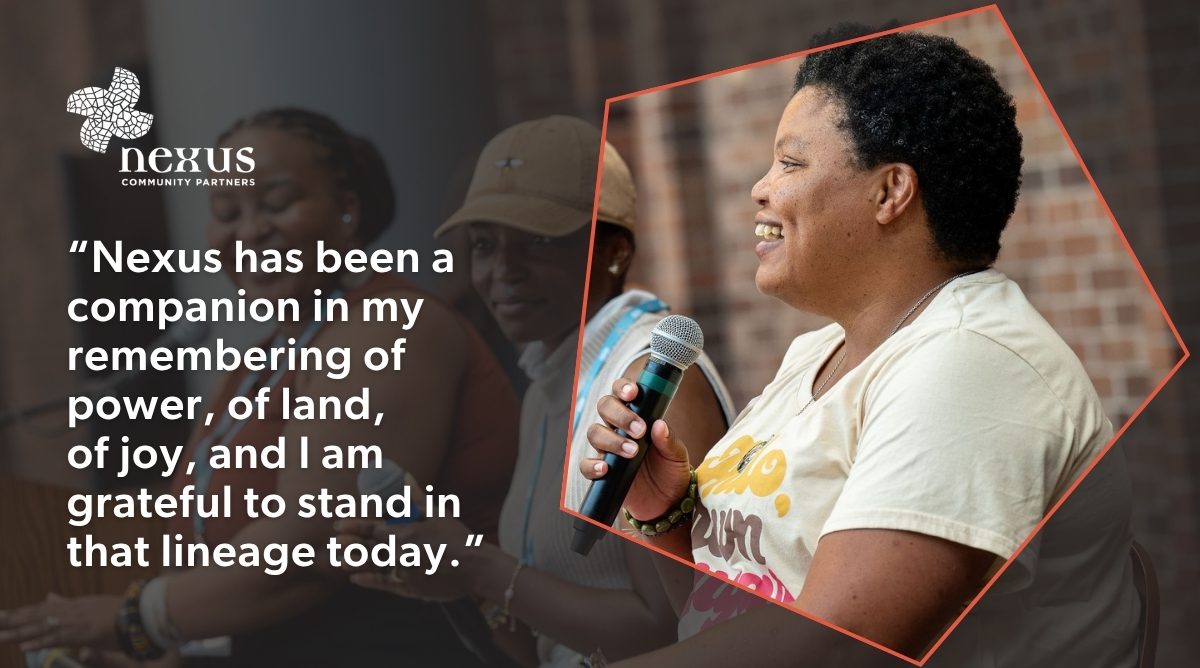
Nexus has been a companion in my remembering of power, of land, of joy, and I am grateful to stand in that lineage today.


What are we really doing when we remember?

Victoria’s story reminds us that the work of creating more liberated communities does not always begin with something new. It begins by remembering the power and possibility that have been present all along.

Support this work


Each year, our Boards & Commissions Leadership Institute (BCLI) hosts two Thursday Night Issue Series sessions with local speakers and facilitated discussions on topics across public policy issues like economic development, health, housing, transit, and workforce development.

Our first session of 2026 was a Commissioners Roundtable, where we invited alumni and/or partners to share their experiences on boards, committees and commissions.

About Our Panelists

  • Elvis Rivera (2023 BCLI alum) has served on the Minnesota Council on Latino Affairs, Southern Minnesota Regional Legal Services (SMRLS), and LatinoLEAD as treasurer and finance committee chair.
  • Lue Vang has served on the Southeast Asia Resource Action (SEARAC), Friends of St. Paul College as board treasurer, Metropolitan Regional Arts Council (MRAC) as board treasurer, and on the St. Paul Planning Commission.
  • Victor Obisakin (2025 BCLI alum) has served on the Council for Minnesotans of African Heritage, the Governor’s Community Council on Inclusion and Equity, and currently serves on the Metropolitan Council.

Roundtable Recap

Elvis, Lue, and Victor talked about their inspirations for joining boards and commissions: wanting to give back, better understand how government works, hold government accountable to community, and have a seat at the table. They also shared how they were inspired by elders and parents who paved the way with their own activism during the Civil Rights movement.

Victor had a great story about getting into a political debate with an elder African American who was a military officer. At the end of the conversation, the officer encouraged Victor to consider running for public office or get appointed to a public body because, as he pointed out, “There are decisions being made for you without you at the table.”

All three talked about the power of serving and how it has broken down barriers and boosted their confidence in their ability to speak out for their communities and represent their constituents. They agreed that for those of us who don’t have experience, it may be daunting because of personal misconceptions about whether or not we are qualified or equipped to step into these spaces. But once we step into our own power and find our voice, we can only get better at exercising our power from there.

Victor ended with a powerful reflection: If you’re considering public service on boards, you should definitely do it, because you don’t make progress by standing or sitting on the sidelines.

Watch the Recording


BCLI Issue Series sessions are dynamic, collaborative, cross-sector events designed to build shared knowledge on broader equity issues. Events are free and open to the public. Stay tuned for our next session in September!

Join the Boards & Commissions Leadership Institute (BCLI) on Thursday, Aug. 6 at 6 pm CT to learn how Twin Cities leaders of color are building power, agency, and change in governance and policy by serving on public boards.

As our country and the world continue through uncertain political times, economic instability, and racial reckoning, Black, Indigenous, and people of color need to work even harder to carve out a presence at governing institutions and ensure communities of color are not left behind. Decision-makers of publicly appointed boards, committees, and commissions hold immense power often overlooked. From public transit to affordable housing, public health to education, there is a board influencing the issues you care about deeply. We must fight for a seat at the table, because the stakes are too high.

Hear from local leaders of color as they share stories and wisdom from their service on boards, committees, and commissions. Together, we’ll build community and learn about strategies that can uplift all our voices, create better representation, and make impactful service on a public body.

Register here


Panel Speakers

Elvis Rivera

Elvis is a first-generation immigrant, finance services professional, and community advocate with governance experience spanning the private, public, and nonprofit sectors.

Elvis currently serves as a member of the Minnesota Council on Latino Affairs, a gubernatorial-appointed state advisory council that advises the governor and legislature on issues affecting Minnesota’s Latino community. He also serves on the board of directors for Southern Minnesota Regional Legal Services (SMRLS), where he supports governance, strategic planning, and financial oversight for one of Minnesota’s largest providers of civil legal aid. He is a BCLI alumnus.

His nonprofit governance experience includes serving as treasurer and finance committee chair for LatinoLEAD, helping guide the organization’s financial strategy during a period of significant growth. He has also served on the boards of Green Card Voices and the Prospanica Twin Cities Chapter.

Lue Vang

Lue is an experienced nonprofit professional with over 15 years of service. He has worked for many local Twin Cities nonprofits across various issues and causes. His wide range of nonprofit and public boards service is impressive and diverse. Lue’s service on boards has included, but is not limited to: board audit chair of the Southeast Asia Resource Action (SEARAC), board treasurer of Friends of St. Paul College, board treasurer of the Me Center (SEARAC), and board treasurer of the Metropolitan Regional Arts Council (MRAC).

Victor Obisakin

Victor is a Nigerian born in Bern, Switzerland. As the son of a Nigerian diplomat, he had a unique upbringing that allowed him to attend elementary school in Brazil, middle school in Nigeria, and high school in Israel. Surrounded by international students, Victor developed a strong sense of empathy and gained the ability to view things through a cultural lens.

He went through the Community Equity Program (CEP) at the Amherst Wilder Foundation and the Nexus BCLI with the goal of becoming more involved in advocacy, state legislative policy, and community change. He has joined the New American Leaders Program and is also a member of the Council for Minnesotans of African Heritage and the Governor’s Community Council on Inclusion and Equity. Victory proudly serves on the Metropolitan Council.


This virtual event is free and open to the public. You do not need to be in our BCLI cohort to attend. As part of the Boards & Commissions Leadership Institute, Nexus hosts two Thursday Night Issue Series sessions that include local speakers and facilitated discussions that are important and related to service on public boards and our issue areas: economic development, health, housing, transit, and workforce development.

Through our Boards & Commissions Leadership Institute, we have cultivated the leadership of 168 alumni and counting who have gone on to create transformational change at every level. Alum Elvis Rivera, from our 2022-23 cohort, has been boldly leading through the Minnesota Council on Latino Affairs. Read his story below!

“When I joined the Boards and Commissions Leadership Institute (BCLI) in 2022, I knew I wanted to serve on a state-appointed board. What I didn’t fully understand yet was what that kind of leadership would require. One of the most valuable parts of the experience was the opportunity to learn directly from experienced public servants, community leaders, and board members. Through those conversations, I gained a behind-the-scenes understanding of how public boards function, the responsibilities they carry, and the realities of public service. Just as importantly, I gained the confidence to see myself serving in those spaces. I learned that effective leadership isn’t about having all the answers. It’s about understanding systems, listening intently, asking better questions, and recognizing that meaningful change takes time and collaboration.

Those lessons prepared me to serve on the Minnesota Council on Latino Affairs (MCLA), where I have represented District 3 since June 2023. Serving on MCLA has challenged and strengthened my leadership in ways I hadn’t anticipated. The work has reinforced that public service rarely comes with perfect agreement. More often, it requires bringing together diverse perspectives, navigating complex public issues, and staying focused on serving the public good. I’ve come to realize that advocating for community is less about choosing sides and more about choosing solutions. Whether discussing economic opportunity, issues affecting immigrant communities, or other priorities impacting Latinx Minnesotans, some of our most meaningful work has involved shaping recommendations for state leaders while ensuring community voices remain at the center of difficult conversations. At times, those discussions have reflected the uncertainty and complexity many people are experiencing, particularly within immigrant communities. They have also reminded me that progress depends on our willingness to stay engaged, even when agreement isn’t immediate.

A leadership book I recently finished introduced the idea of staying ‘on the line’ during moments of uncertainty. That phrase has stuck with me because it captures so much of what public service has taught me. I’ve learned that real leadership often begins with listening, building trust, and creating space for people to work through difficult challenges together.

Looking back, BCLI did more than prepare me to serve on a state-appointed board. It sparked a commitment to continually grow as a leader. Since then, I was honored to be selected as a Bush Fellow, and as part of that journey I’ve intentionally pursued opportunities to learn from leaders across the country and around the world. Those experiences have shown me countless examples of people creating transformational change through innovation, grit, and cross-sector collaboration. They’ve also shown me how progress slows when organizations lose sight of the bigger picture or become unwilling to truly listen to one another. More than anything, they’ve reinforced my belief that no single organization, sector, or leader can solve our biggest challenges alone.

It’s a lesson that has continued to surface through my reading and leadership experiences. The more I’ve learned, the more convinced I’ve become that lasting solutions are built by bringing together government, business, philanthropy, education, and community. That belief is also reflected in the focus of my Bush Fellowship. My Bush Fellowship is centered on expanding economic opportunity by helping close the racial wealth gap through greater access, financial literacy, and education. I believe education is the foundation that allows each generation to build upon the sacrifices of those who came before them. To me, that work is one expression of a much broader responsibility we all share to leave our communities stronger than we found them.

I stand on the shoulders of giants who walked so that we could run. They did their part for us. Now it is our responsibility to do our part for those who come after us. Our actions are watched, our example is emulated, and the work we do today helps determine the opportunities available to the next generation. That’s why I often say, ‘Those that can should. I can, so I will.’ I’ve always believed public service is part of our responsibility to one another.

In a time marked by polarization and division, I believe our greatest opportunity is not to retreat into our differences but to lean into collaboration. Leadership is not about having the loudest voice. It’s about bringing people together around a shared purpose, staying at the table long enough to build trust, and leaving our communities stronger than we found them.

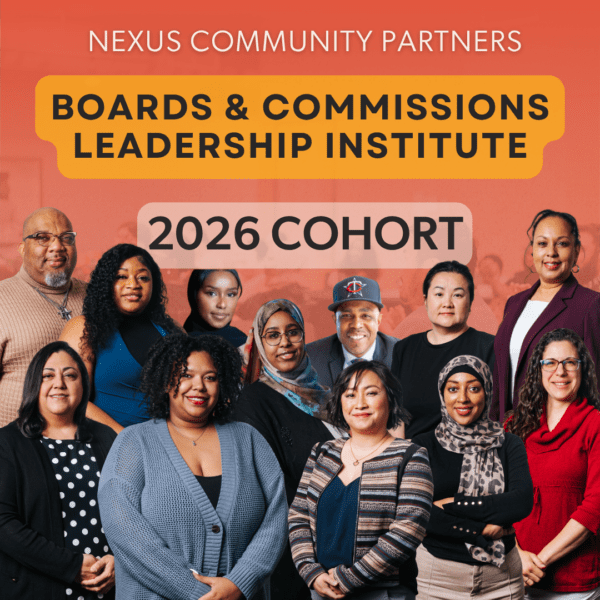
In April, 13 new fellows embarked on our seven-month Boards & Commissions Leadership Institute journey. Our latest group marks the 13th cohort of the program—168 alumni strong!

We are honored to equip these leaders to serve on city, county, metro, and state boards and commissions. They are walking alongside one another in power-building and working to advance equity across economic development, health, housing, transit, and workforce development in Minnesota.

Join us in cheering on this year’s fellows, and learn more about their work here!

Through our Boards & Commissions Leadership Institute, we have cultivated the leadership of 168 alumni and counting who have gone on to create transformational change at every level. Alum Tim Brewington, from our 2019-20 cohort, is meeting the moment with bold leadership in Woodbury. Read his story below!

“I am a founding member of the Multicultural Advisory Committee for the Woodbury Public Safety Department, established in 2019. From the beginning, our work has required difficult and necessary conversations about pain, trust, accountability, and the possibility of building stronger relationships between law enforcement and the community we all serve.

The first true test of this committee and its relationship with the police department came on May 25, 2020, when George Floyd was murdered after a police officer kneeled on his neck during an arrest in Minneapolis, Minnesota. In that moment, I demanded that Woodbury take a public stance. I insisted that our department clearly name what had happened and create space for real, public conversations with both the committee and the broader community.

There was resistance. Eventually, the Director of Public Safety agreed to sit down with me for an interview to discuss his reaction to George Floyd’s death and to address how Woodbury Public Safety can be held accountable in its responsibility to protect and serve all residents. That moment became a turning point in our work.

Unfortunately, the conversations did not end there. Continued loss of life at the hands of police across the Twin Cities forced us to return again and again to these hard discussions. While these tragedies did not occur in Woodbury, what happens in Minneapolis and Saint Paul affects trust, safety, and community well beyond city borders. It affects us here.

I firmly believe safety is built through relationships. When community members and police officers know one another as human beings, when transparency and accountability are present, trust can grow. Trust is what makes real public safety possible. Change does not happen through silence. It happens one conversation at a time.

I am grateful for the continued commitment of the Woodbury police, fire, and EMS departments and for the men and women who strive each day to serve all residents with compassion, professionalism, and courage.

The Multicultural Advisory Committee meeting on Monday, Jan. 26—amid a long, violent ICE occupation and in the wake of Renee Macklin Good and Alex Pretti’s murders—was different from any other meeting.

In my eight years of service, I have never witnessed what I saw that night. Officers in full uniform broke down in tears over what is happening in our community. The energy in the room shifted in a way that was unmistakable. The weight of the moment was shared, unspoken, and heavy.

When those sworn to protect a community are overwhelmed by its suffering, something is profoundly wrong. This is not normal. This is not sustainable. And this is not okay. In that moment, I felt both heavy and hopeful. Heavy because of the pain we were witnessing, and hopeful because we were in community. Law enforcement and residents were together, supporting one another and choosing to face this moment side by side.

Real change begins when we refuse to look away from discomfort and instead choose accountability, connection, and action. Every honest conversation, every act of listening, and every decision to demand better brings us closer to the community we are striving to build. This work is ongoing, and it belongs to all of us. If we remain present, engaged, and willing to act, transformation is possible, one conversation at a time.”
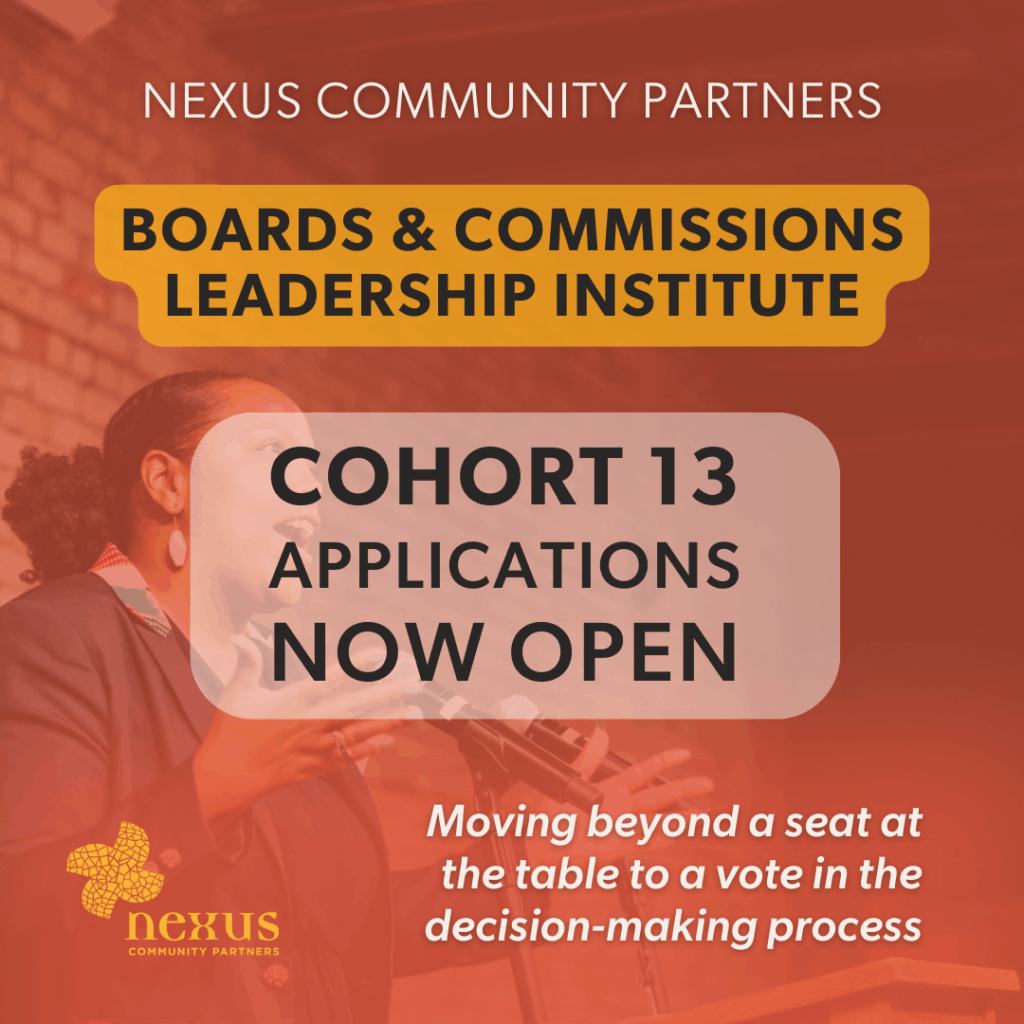
Are you ready to make an impact in systems change for greater equity? Do you want to improve your skills as a racial justice advocate to affect policy changes at the level of publicly appointed boards, committees, and commissions? Then good news: There’s still time to apply for our 2026 Boards & Commissions Leadership Institute cohort!

Learn about the experience from two of our alumni below, and submit your application by Friday, Jan. 23, 11:59 pm CT.

Victoria McWane-Creek, 2023-24 Cohort

Founder, Organization 4 Full Participation

“When I applied to join BCLI, I had big hopes: Hopes rooted in reality and reaching for change. As a Black woman living in rural Minnesota, I have witnessed the limits of advocacy alone. I knew I needed to be in the rooms where decisions happened—those decisions that profoundly affect, and often cause harm, to people left out of the conversation. I wanted not to just be part of the conversation, but have the tools to shape those conversations with purpose and wisdom. My dream was to address the deep disparities in economics and health that have long impacted Black folks in rural Otterdale County and beyond. Being part of BCLI gave me the opportunity to connect with peers—to access resources and processes and engage with systems in ways that have allowed me to move toward a vision for strategic and lasting change.

Looking back on my time in the cohort, I’m profoundly grateful for the space it created within me, the growth it nurtured, and the focus it inspired. Through it, I gained tools and frameworks that have expanded my approach to leadership and civic engagement. I’ve learned to broaden my perspective and tackle challenges with thoughtfulness and determination. And most importantly, I met some incredible individuals and made some fantastic connections with folks who share a commitment to building a better world.

This program isn’t a training; it’s a journey. It’s a chance to turn your aspirations into action, grounded in equity, empathy, and empowerment for self and others. It’s about showing up in love, willing to turn over tables and talk it out at the same time. The tools you gain aren’t theoretical, they’re practical, real-world guides to navigating civic life together. If your heart is in advocacy, community service, and leadership, I’d say take the leap, because it’s worth it.”

Hodan Hassan, 2016-17 Cohort

Former Minnesota State Representative

“When I first joined BCLI in 2016-17, we navigated a deeply uncertain and divisive time because of who we had in the White House serving as president. And our communities—particularly Black, Indigenous and people of color—felt increasingly under attack. Many of us were searching for belonging, strength, and tools to fight back. BCLI became that space. It provided me more than knowledge; it gave me and others community power and purpose. It reminded us that we were not alone. And together we could push back against the forces seeking us to silence us.

And here we are again today. The landscape feels all too familiar. Once again, we’re witnessing the rise of fascism, divisiveness, and hate, threats that seek to undo decades of hard-fought progress. This is why the work of BCLI is more vital today than ever before. We need our collective power to confront these forces and build a future rooted in justice, dignity, and shared power.

BCLI will give you the courage to dismantle unjust systems and the tools to build new ones. We are not alone. We have each other, and together, we have the collective power to shape a more just and inclusive Minnesota and America. Reach within. Show up for one another. Connect with your community. Continue grounding in the work. Surround yourself with the right people and continue the work. Tomorrow is a different day.”

Applications for our next Boards & Commissions Leadership Institute cohort are open through Jan. 23, 2026. Register for our info session on Thursday, Jan. 8, to learn all about the program!

2026 Boards and Commissions Leadership Institute Information Session: Cohort 13

Join the Boards and Commissions Leadership Institute team for an information session as we welcome applications for cohort 13! 


Thursday, January 8

5:30 - 6:30 pm CDT

In person at Nexus Community Partners

2314 University Ave W Suite 18, St Paul, MN 55114


The Boards and Commissions Leadership Institute team will share a brief history of BCLI, discuss cohort requirements, provide a curriculum overview, and answer questions or concerns with a Q&A.


Applications for the Boards & Commissions Leadership Institute (BCLI) are open now through Friday, Jan. 23! We are excited to recruit our next cohort of equity champions who want to be effective members on boards, committees, commissions and task forces at all levels of government. Apply and learn how to get a seat on a decision-making table!

How It Works

For too long, systems of governing have rigged the rules to concentrate power and wealth in fewer and whiter hands. They’ve put up barriers to shut out Black people, Indigenous people, and people of color (BIPOC) from decision-making, as well as women, queer folks, disabled folks, low-wealth folks, and other historically marginalized and oppressed people. BCLI is a seven-month leadership program working to change this. We support, train, and help place BIPOC and other underrepresented community members on city and county publicly appointed boards and commissions.

Fellows commit to making governing decisions from the inside to nourish communities for this generation and generations to come. At a time when civic participation and democracy-building is most preciously needed, we must be engaged at every level of decision-making that affects all our communities. And that starts with boards and commissions!

Time Commitment

April – October 2026

  • Attend monthly Saturday Sessions, plus our launch event, Thursday Night Issue Series, and graduation
  • Work outside of sessions includes readings, online discussions, webinars, and commission meetings
  • Total time (including trainings and assignments) is approximately 80 hours
  • Fellows receive a small stipend of $500 to honor their time and commitment

See all dates and times

Info Sessions

Join us to learn more about the program, nomination, and selection process!

Resources